

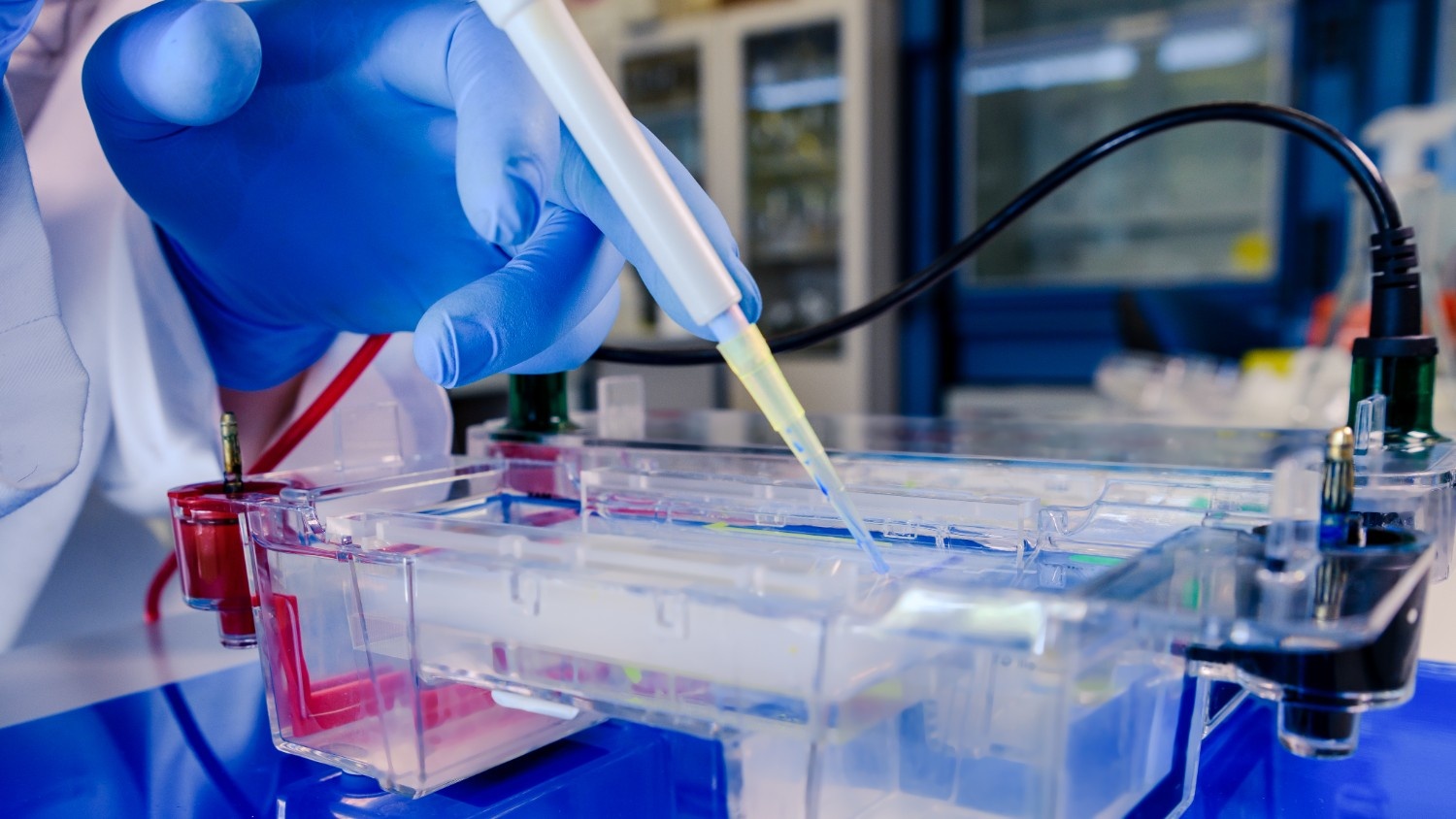
Artificial intelligence has transformed the way you analyze biological data, identify patterns, and accelerate scientific discovery. From predicting protein structures to automating data interpretation, AI has become an invaluable research companion. However, AI is only as reliable as the experimental data you provide. That is why SDS PAGE electrophoresis continues to play a vital role in modern laboratories. It delivers direct, experimental evidence of protein size, purity, and expression that computational models simply cannot replace.
Whether you work in academic research, biotechnology, pharmaceuticals, or food science, you still need dependable laboratory methods to validate your findings. AI may generate predictions, but SDS PAGE electrophoresis confirms whether those predictions reflect biological reality.
Why Experimental Validation Still Matters
AI models are trained on existing datasets and statistical relationships. While they can predict protein behavior with impressive accuracy, they cannot physically examine your samples. Every experiment introduces variables such as sample preparation, degradation, contamination, and unexpected protein modifications that AI alone cannot detect.
When you perform SDS PAGE electrophoresis, you obtain a visual representation of proteins separated according to molecular weight. This allows you to verify whether your sample contains the expected proteins before moving forward with additional experiments or computational analysis.
In other words, AI can suggest possibilities, but laboratory validation confirms facts.
How SDS PAGE Electrophoresis Supports AI-Driven Research
Instead of replacing laboratory techniques, AI works best alongside proven analytical methods. You can strengthen your research by combining predictive algorithms with experimentally verified protein analysis.
Some of the most important advantages include:
- Confirming protein expression levels
- Evaluating sample purity
- Detecting protein degradation
- Identifying unexpected contaminants
- Supporting reproducible experimental results
- Providing reliable data for machine learning models
When your AI models are trained using high-quality laboratory data, their predictions become significantly more reliable.
Why Protein Quality Is More Important Than Ever
Modern research often involves massive datasets generated from genomics, proteomics, and bioinformatics platforms. However, inaccurate protein samples can introduce misleading conclusions that affect every downstream analysis.
SDS PAGE electrophoresis helps you determine whether your proteins meet quality standards before investing time and resources into expensive experiments.
By identifying impurities early, you reduce experimental errors, improve reproducibility, and increase confidence in your results.
Applications Across Multiple Scientific Fields
One reason SDS PAGE electrophoresis has remained relevant for decades is its remarkable versatility. You can use it across numerous research disciplines.
Biomedical Research
Researchers use SDS PAGE electrophoresis to analyze protein expression associated with disease progression, therapeutic targets, and biomarker discovery.
Pharmaceutical Development
Drug developers depend on protein characterization to verify biologics, evaluate production quality, and monitor manufacturing consistency.
Biotechnology
Biotechnology laboratories use SDS PAGE electrophoresis to examine recombinant proteins, optimize purification workflows, and verify expression systems.
Food and Nutrition Research
Scientists analyze food proteins for quality control, nutritional studies, allergen research, and product development.
Academic Research
Universities continue to teach SDS PAGE electrophoresis because it provides a fundamental understanding of protein separation and molecular biology.
AI Cannot Detect Every Experimental Variable
Even the most advanced AI systems cannot directly observe your laboratory samples.
For example, AI cannot independently identify:
- Protein degradation caused by improper storage
- Sample contamination during preparation
- Incomplete protein extraction
- Unexpected cleavage products
- Aggregated proteins
- Variations introduced during purification
These factors become immediately visible through carefully performed SDS PAGE electrophoresis, allowing you to troubleshoot problems before they compromise your research.
Improving Reproducibility with Reliable Protein Analysis
Reproducibility remains one of the biggest challenges in scientific research. AI can assist with statistical analysis, but reproducibility begins with consistent laboratory practices.
When you incorporate SDS PAGE electrophoresis into your workflow, you establish a dependable quality control checkpoint that verifies protein integrity before additional testing.
This helps you:
- Reduce false conclusions
- Improve publication quality
- Increase confidence in experimental outcomes
- Strengthen collaborations
- Support regulatory compliance
Reliable experimental validation remains essential regardless of how sophisticated computational tools become.
Choosing an Experienced Protein Analysis Partner
The accuracy of your results depends not only on the method but also on the expertise behind it. Working with an experienced laboratory ensures that your protein samples are analyzed using validated procedures, advanced instrumentation, and rigorous quality standards.
If you require professional SDS PAGE electrophoresis protein analysis services for accurate molecular weight determination and protein characterization, partnering with an established laboratory can improve both efficiency and confidence throughout your research projects.
Researchers worldwide rely on Kendrick Labs, Inc. for advanced protein analysis, electrophoresis, and specialized laboratory services because of its decades of experience supporting scientific investigations across multiple industries.
The Future Is AI Plus Experimental Science
Rather than competing, AI and SDS PAGE electrophoresis complement one another.
AI excels at:
- Pattern recognition
- Predictive modeling
- Data interpretation
- Large-scale analysis
SDS PAGE electrophoresis excels at:
- Experimental validation
- Protein separation
- Quality assessment
- Sample verification
- Reproducible laboratory evidence
The strongest research strategies combine both approaches. AI accelerates discovery, while experimental protein analysis ensures those discoveries are scientifically sound.
Conclusion
As artificial intelligence continues reshaping life sciences, experimental validation remains indispensable. SDS PAGE electrophoresis provides the trustworthy protein data that researchers need to verify AI-generated predictions, improve reproducibility, and maintain scientific integrity.
By integrating computational intelligence with proven laboratory techniques, you create a stronger research foundation capable of delivering accurate, meaningful, and reproducible results.
If you are looking for expert protein analysis solutions tailored to your research goals, contact us today for professional SDS PAGE electrophoresis support and personalized laboratory consultation.
Frequently Asked Questions
Why is SDS PAGE electrophoresis still important despite AI advancements?
AI predicts protein behavior using existing data, while SDS PAGE electrophoresis experimentally verifies protein size, purity, and expression. Both technologies serve different but complementary purposes.
Can AI replace SDS PAGE electrophoresis?
No. AI cannot physically analyze protein samples or detect laboratory-specific issues such as degradation, contamination, or incomplete purification. Experimental validation remains essential.
What industries commonly use SDS PAGE electrophoresis?
SDS PAGE electrophoresis is widely used in pharmaceutical research, biotechnology, academic laboratories, biomedical sciences, food analysis, and quality control.
How does SDS PAGE electrophoresis improve research quality?
It confirms protein identity, evaluates purity, detects contaminants, and provides reproducible experimental data that strengthens downstream analyses and AI models.
Why should researchers combine AI with SDS PAGE electrophoresis?
Combining predictive AI with experimental protein validation produces more accurate conclusions, improves reproducibility, and increases confidence in scientific discoveries.