

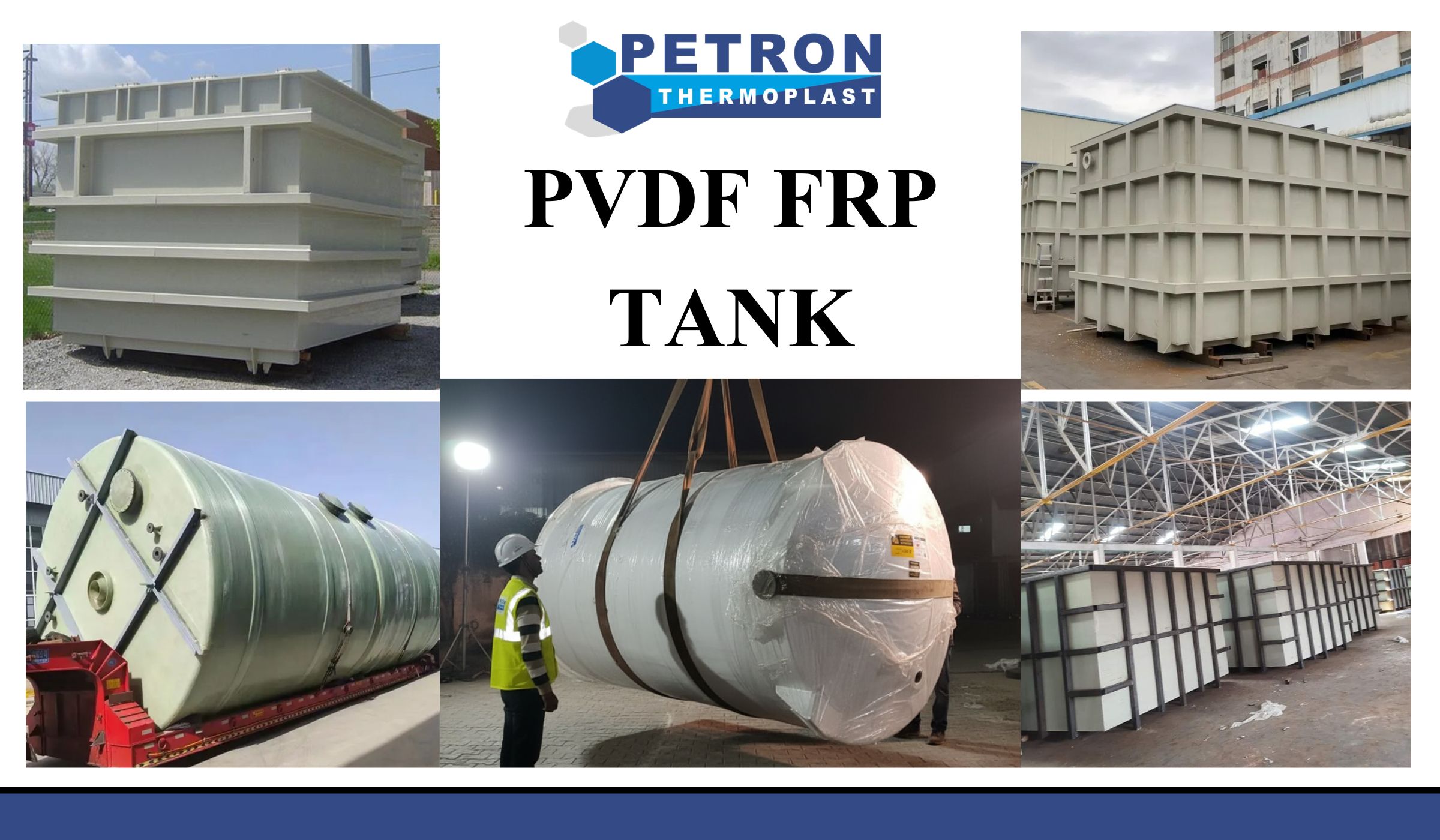
Industrial facilities that handle corrosive chemicals require storage systems that deliver exceptional durability, safety, and long-term performance. Whether it is chemical manufacturing, pharmaceuticals, metal finishing, water treatment, or semiconductor production, proper chemical storage plays a critical role in ensuring smooth operations and regulatory compliance. Among the various storage solutions available today, the PVDF FRP Tank has become one of the most trusted options for industries dealing with aggressive chemicals and demanding operating environments.
Combining the superior chemical resistance of PVDF (Polyvinylidene Fluoride) with the structural strength of FRP (Fiber Reinforced Plastic), PVDF FRP tanks offer unmatched protection against corrosion, chemical attack, and environmental stress. These tanks are specifically engineered to provide reliable industrial chemical management while minimizing maintenance costs and maximizing service life.
Understanding PVDF FRP Tanks
A PVDF FRP tank is a dual-laminate storage tank that consists of two primary layers:
- Inner PVDF Liner: Provides direct chemical resistance and protects the tank from aggressive substances.
- Outer FRP Structure: Delivers mechanical strength, structural stability, and impact resistance.
This combination creates a highly durable storage solution capable of handling some of the most challenging industrial chemicals.
Unlike conventional metal tanks that may corrode over time, PVDF FRP tanks maintain their integrity even when exposed to highly corrosive environments.
Why Reliable Chemical Management Matters?
Chemical storage is a critical aspect of industrial operations. Poor storage solutions can lead to:
- Chemical leaks
- Equipment damage
- Product contamination
- Environmental hazards
- Workplace safety risks
- Costly downtime
- Regulatory compliance issues
Investing in high-quality storage systems helps industries maintain operational efficiency while ensuring the safe handling of chemicals throughout the production cycle.
Key Features of PVDF FRP Tanks
Superior Chemical Resistance
PVDF is known for its outstanding resistance to a wide range of aggressive chemicals, including acids, alkalis, oxidizers, and solvents.
This makes PVDF FRP tanks suitable for storing:
- Sulfuric acid
- Hydrochloric acid
- Nitric acid
- Sodium hypochlorite
- Caustic solutions
- Process chemicals
- Specialty chemicals
Excellent Mechanical Strength
The FRP outer layer provides exceptional structural support and allows the tank to withstand demanding industrial conditions.
Corrosion-Free Performance
Unlike steel or metal storage tanks, PVDF FRP tanks are immune to rust and corrosion, significantly extending operational life.
High Temperature Resistance
PVDF offers excellent thermal stability, making the tank suitable for elevated-temperature applications.
Long Service Life
The combination of PVDF and FRP results in a storage solution designed for decades of reliable service.
Low Maintenance Requirements
Corrosion resistance minimizes inspection, repair, and replacement costs.
Advantages of Using PVDF FRP Tanks
Enhanced Safety
Chemical-resistant construction reduces the risk of leaks and chemical exposure.
Reduced Maintenance Costs
Industries benefit from lower maintenance expenses compared to metal tanks.
Improved Process Reliability
Reliable chemical storage supports uninterrupted production operations.
Cost-Effective Investment
Long service life provides excellent return on investment.
Environmental Protection
Leak-resistant designs help protect the environment from hazardous chemical releases.
Operational Efficiency
Stable and secure chemical storage improves overall plant productivity.
Applications of PVDF FRP Tanks
Chemical Processing Plants
Chemical manufacturers rely on PVDF FRP tanks for storing raw materials, intermediates, and finished products.
Water Treatment Facilities
These tanks are commonly used for chemical dosing and water treatment chemicals.
Pharmaceutical Manufacturing
High-purity storage requirements make PVDF FRP tanks suitable for pharmaceutical operations.
Semiconductor Industry
Semiconductor facilities use PVDF-lined equipment for handling high-purity chemicals.
Metal Finishing and Electroplating
Aggressive chemicals used in plating processes require corrosion-resistant storage systems.
Fertilizer and Agricultural Chemical Plants
The tanks provide safe storage for industrial chemicals used in agricultural applications.
Specialty Chemical Industries
PVDF FRP tanks offer reliable containment for high-value specialty chemicals.
Chemicals Commonly Stored in PVDF FRP Tanks
PVDF FRP tanks are suitable for storing numerous industrial chemicals, including:
- Sulfuric Acid (H₂SO₄)
- Hydrochloric Acid (HCl)
- Nitric Acid (HNO₃)
- Phosphoric Acid
- Sodium Hydroxide
- Sodium Hypochlorite
- Ferric Chloride
- Hydrogen Peroxide
- Industrial Solvents
- Process Chemicals
Chemical compatibility should always be verified before final tank selection.
PVDF FRP Tank Design Benefits
Dual Laminate Construction
The PVDF liner and FRP structure work together to provide maximum protection and durability.
High Structural Integrity
FRP reinforcement enables large-capacity tank fabrication while maintaining strength.
Custom Manufacturing Capability
Tanks can be designed according to specific project requirements.
Lightweight Construction
Compared to metal alternatives, PVDF FRP tanks are easier to transport and install.
Flexible Design Options
Available in vertical, horizontal, cylindrical, and custom configurations.
Types of PVDF FRP Tanks
Vertical Storage Tanks
Widely used for bulk chemical storage and process applications.
Horizontal Storage Tanks
Suitable for space-constrained installations and transport applications.
Process Tanks
Designed for mixing, dosing, and chemical processing operations.
Pickling Tanks
Used in metal treatment and surface finishing industries.
Custom Fabricated Tanks
Engineered to meet specialized industrial requirements.
Factors to Consider When Selecting a PVDF FRP Tank
Chemical Compatibility
The stored chemical must be compatible with the PVDF liner.
Storage Capacity
Tank volume should meet operational requirements.
Operating Temperature
Temperature conditions influence material selection and design.
Installation Environment
Outdoor and indoor installations may require different design considerations.
Pressure Conditions
Storage and process pressures must be evaluated during design.
Regulatory Requirements
Tank design should comply with applicable industry standards.
Maintenance Guidelines
Although PVDF FRP tanks require minimal maintenance, regular inspections help maximize service life.
Recommended practices include:
- Visual inspection of tank surfaces
- Checking nozzles and fittings
- Monitoring structural integrity
- Cleaning when necessary
- Reviewing operating conditions
Routine maintenance ensures long-term reliability and safe operation.
Why Industries Prefer PVDF FRP Tanks Over Conventional Materials?
Better Chemical Resistance
PVDF outperforms many traditional storage materials in aggressive chemical environments.
Longer Service Life
The dual-laminate design significantly extends tank lifespan.
Reduced Corrosion Risks
Corrosion-related failures are virtually eliminated.
Lower Lifecycle Costs
Maintenance and replacement costs are substantially reduced.
Greater Reliability
Industries benefit from consistent long-term performance.
Improved Safety Standards
Leak-resistant construction enhances workplace and environmental safety.
Why Choose Petron Thermoplast?
Petron Thermoplast is a leading manufacturer of industrial thermoplastic products, storage tanks, piping systems, and custom-engineered chemical handling solutions. The company offers premium-quality PVDF FRP tanks designed for the most demanding industrial applications.
Key Advantages
- High-grade PVDF lining materials
- Strong FRP structural construction
- Custom fabrication capabilities
- Excellent corrosion resistance
- Advanced manufacturing technology
- Strict quality control procedures
- Competitive pricing
- Timely project delivery
- Technical engineering support
- Global supply capability
Petron Thermoplast serves industries including chemical processing, pharmaceuticals, water treatment, electroplating, semiconductors, fertilizers, and specialty chemicals.
Conclusion
A PVDF FRP Tank for Reliable Industrial Chemical Management provides the ideal combination of chemical resistance, structural strength, safety, and durability. Its dual-laminate construction offers superior protection against aggressive chemicals while ensuring long-term operational reliability.
For industries seeking a dependable chemical storage solution, PVDF FRP tanks represent a smart investment that improves safety, reduces maintenance costs, and supports efficient plant operations. By partnering with an experienced manufacturer such as Petron Thermoplast, businesses can obtain customized storage solutions engineered to meet the highest standards of industrial performance.