

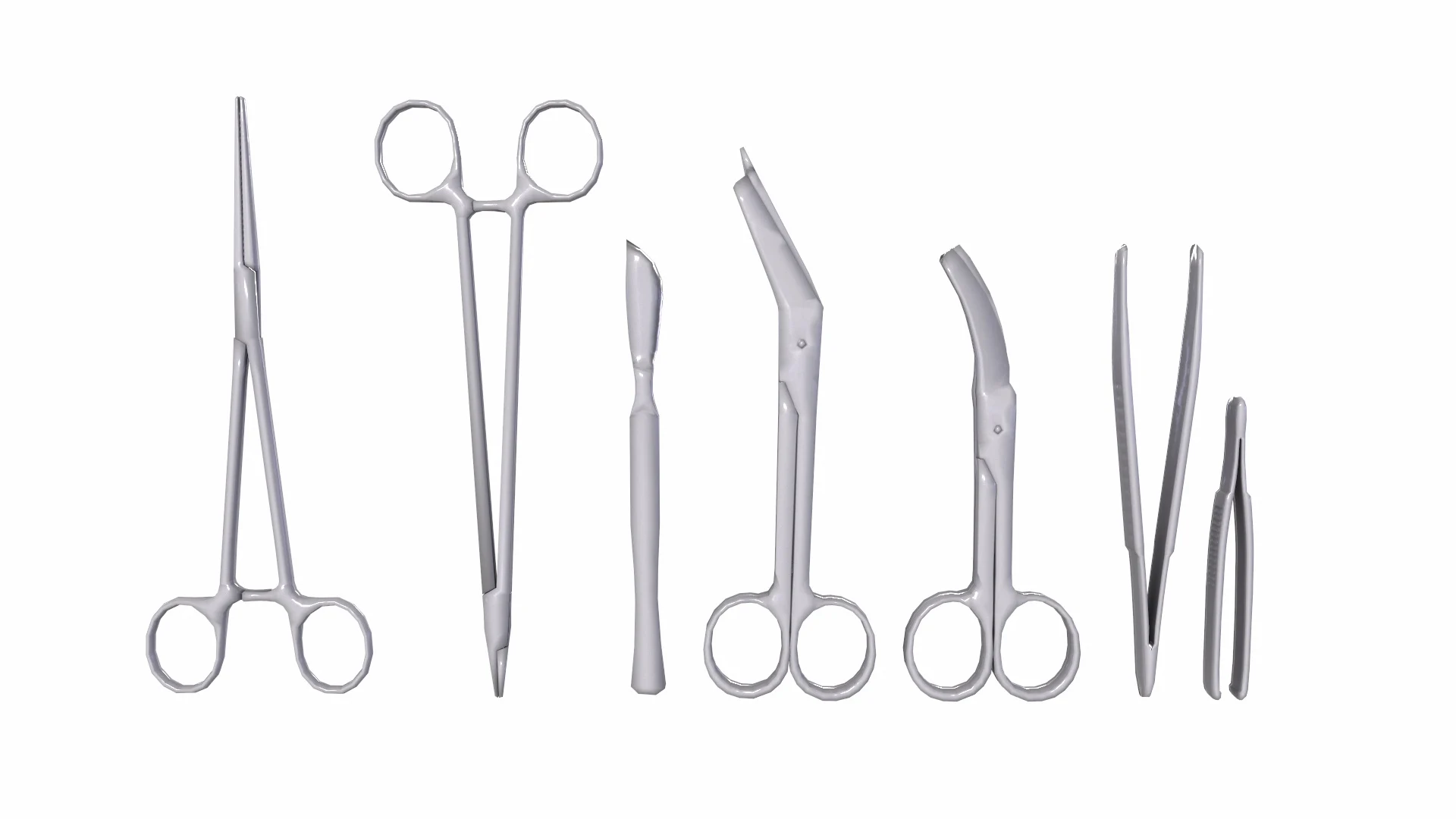
Modern surgery depends on carefully selected instruments that support precision, control, and efficiency during different procedures. From basic cutting tools to specialized equipment, each instrument has a specific purpose within the operating environment.
Understanding a list of surgical instruments helps healthcare professionals, procurement teams, and medical facilities recognize the different tools required for routine and specialized procedures. Proper selection involves considering the surgical specialty, instrument function, material quality, handling requirements, sterilization needs, and expected frequency of use. A well-organized instrument selection process supports smoother operating-room preparation and helps surgical teams access the right tools when needed.
Essential Surgical Tools Supporting Modern Procedures
Understanding surgical instrument categories helps healthcare teams organize operating-room requirements and select suitable tools for different procedures.
1. Cutting And Dissecting Instruments
Cutting instruments are essential for making incisions and dissecting tissue. Scalpels, scalpel handles, Mayo scissors, and Metzenbaum scissors are commonly used according to procedural requirements. Different blade shapes, scissor designs, and sizes provide varying levels of control. The right cutting instrument depends on tissue type, required precision, and surgical technique. Sharp, well-maintained instruments can support controlled handling and consistent performance throughout procedures.
2. Grasping And Tissue Handling Instruments
Forceps allow surgeons to hold, manipulate, or stabilize tissues during procedures. Common variations include Adson, dressing, Allis, Babcock, and Kocher forceps, each designed for different handling needs. Some provide delicate tissue control, while others offer stronger grasping capability. Choosing the appropriate forceps depends on tissue characteristics, procedural needs, and the level of control required. Proper instrument selection helps surgical teams handle tissue more precisely.
3. Clamping And Hemostatic Instruments
Hemostatic instruments help control blood vessels and manage bleeding during surgery. Common examples include artery forceps, mosquito forceps, Kelly clamps, and Crile forceps. Their size, jaw structure, and locking mechanisms vary according to procedural requirements. Reliable clamping instruments should provide consistent grip and controlled handling. Appropriate selection helps surgical teams maintain an organized workflow while meeting bleeding-control needs across different procedures.
4. Suturing And Wound Closure Instruments
Needle holders play an important role during wound closure by providing controlled handling of surgical needles. Mayo-Hegar, Olsen-Hegar, and other needle-holder designs can accommodate different suturing requirements. The instrument selected depends on needle size, tissue location, and the surgeon’s preferred technique. A secure grip supports accurate needle placement and controlled suturing. Properly maintained needle holders can also improve handling consistency during procedures that require repeated or delicate wound closure.
5. Retracting And Exposure Instruments
Retractors help maintain visibility by holding tissues away from the operative field. Langenbeck, Deaver, and Gelpi retractors offer different approaches to tissue exposure and are selected based on surgical access requirements. Their shape, depth, and mechanism influence how effectively they can support exposure. Choosing the appropriate retractor requires consideration of the procedure, anatomical area, and required access. Reliable retractors improve visibility and help keep the surgical field organized.
Specialized Instrument Selection For Surgical Efficiency
Modern surgical environments require instruments designed for specific specialties, procedures, access requirements, and handling preferences. A comprehensive list of surgical instruments may include dedicated tools for orthopedics, laparoscopy, neurosurgery, urology, gynecology, ENT, ophthalmology, and plastic surgery. Each specialty requires instruments with different designs, dimensions, working ends, and applications. Laparoscopic procedures, for instance, need tools suited to minimally invasive access, while neurosurgery demands highly precise instruments for delicate anatomical areas. Hospitals should assess procedural requirements before purchasing individual instruments or complete sets. Organizing equipment by specialty can also simplify inventory management, reduce preparation time, and help surgical teams locate suitable instruments efficiently.
Quality Factors Influencing Surgical Instrument Selection
Instrument quality affects handling, durability, maintenance, and long-term usability within demanding clinical environments.
1. Material Strength And Durability
Surgical instruments are commonly manufactured from medical-grade stainless steel because it offers durability and resistance to corrosion when properly maintained. Material quality is particularly important for instruments exposed to repeated cleaning and sterilization cycles. Strong construction can help instruments retain their functional characteristics over extended use while supporting reliable performance. Healthcare facilities should evaluate material specifications and manufacturing quality rather than selecting instruments based solely on initial purchase price.
2. Precision And Functional Design
The design of an instrument directly affects how easily it can be handled during a procedure. Balanced construction, properly aligned jaws, sharp cutting edges, and smooth mechanisms can support controlled use. Different surgical applications require different dimensions and working ends, so instrument design should match the intended procedure. Precision manufacturing also helps maintain consistency between instruments, which is particularly valuable when hospitals purchase multiple units or complete instrument sets.
3. Sterilization And Maintenance Requirements
Reusable instruments must be compatible with appropriate cleaning and sterilization processes. Instruments that withstand repeated sterilization can provide better long-term usability when handled according to manufacturer instructions. Healthcare teams should also establish inspection routines to identify corrosion, damaged surfaces, loose joints, dull edges, or other signs of wear. Proper maintenance supports instrument performance while helping healthcare facilities manage replacement requirements and maintain organized operating-room inventories.
4. Procedure-Specific Compatibility
The right instrument should match the procedure for which it is intended. Factors such as access depth, tissue type, surgical technique, and surgeon preference can influence selection. A general instrument may not provide the same functionality as a specialized tool designed for a particular application. Hospitals can benefit from reviewing procedure requirements before building instrument sets, ensuring that commonly performed operations have appropriate tools readily available.
5. Supplier Reliability And Product Range
A dependable supplier can simplify procurement by providing access to multiple instrument categories and configurations. Buyers may need individual instruments, specialty-specific sets, customized options, or larger quantities depending on facility requirements. Reviewing product catalogs, specifications, quality information, and available support helps procurement teams make more informed decisions. A supplier with a broad range can also make it easier to standardize instruments across departments and manage future replacement or expansion needs.
Conclusion: Building A More Reliable Surgical Setup
Understanding general instruments for surgery is essential for creating organized and dependable operating-room setups. From scalpels and scissors to forceps, needle holders, retractors, hemostats, and suction tubes, each category supports a specific surgical function. Selecting instruments based on procedure, material quality, precision, sterilization requirements, and handling needs helps healthcare facilities maintain efficient workflows and dependable equipment.
For hospitals, clinics, and healthcare procurement teams seeking reliable surgical solutions, Salwan Surgicare provides a broad range of instruments across general and specialized surgical categories. Its product portfolio supports different clinical needs, helping buyers find suitable individual instruments and sets while emphasizing precision, durability, and consistent performance.