
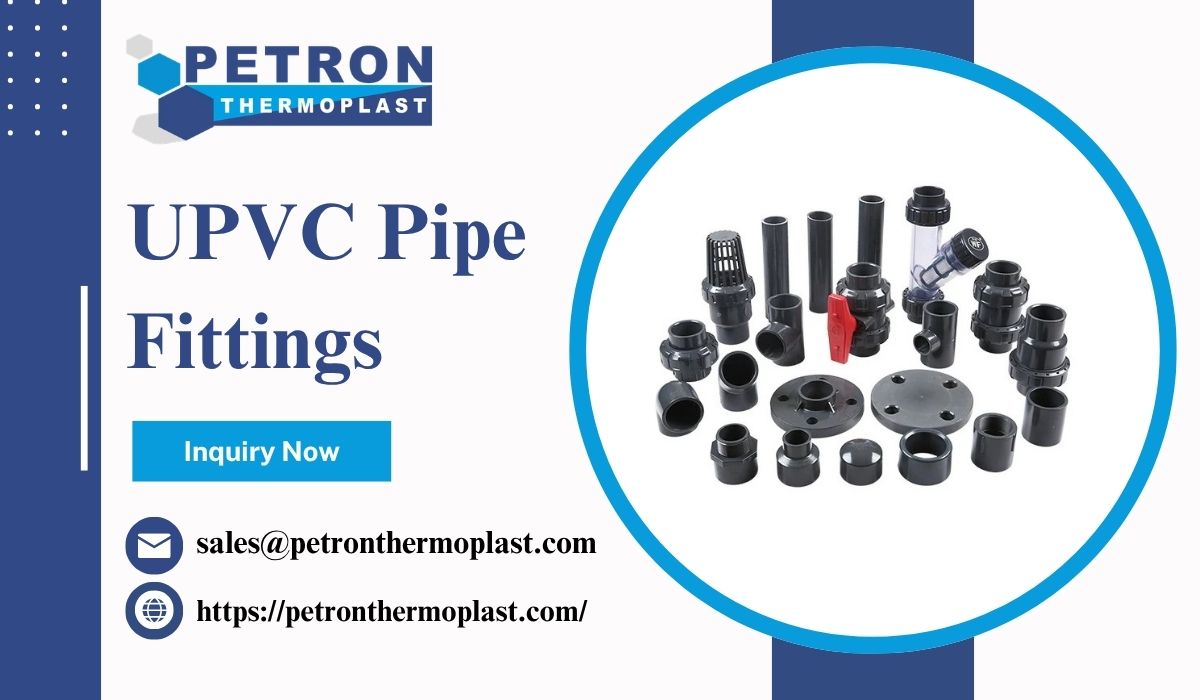
UPVC pipe fittings are widely used in industrial piping, water distribution, drainage and fluid handling systems. Their lightweight construction, corrosion resistance and easy installation make them a practical choice for many projects. These fittings connect pipes, change flow direction, create branch lines and help complete a properly designed piping network.
Petron Thermoplast offers a range of UPVC pipe fittings in different designs and sizes, with customization options for project-specific requirements. Our product range includes elbows, tees, reducers, couplers, unions, flanges, adapters and other fittings used in industrial piping installations.
Whether you are planning a new pipeline, expanding an existing facility or sourcing replacement components, selecting suitable UPVC pipe fittings is important for system performance and long-term reliability.
What Are UPVC Pipe Fittings?
UPVC stands for Unplasticized Polyvinyl Chloride. It is a rigid thermoplastic material used in many piping applications. Unlike flexible PVC formulations, UPVC does not contain added plasticizers intended to make the material flexible.
UPVC pipe fittings connect sections of pipe and help create a complete piping system. Depending on the design, a fitting may change the direction of flow, connect pipes of different diameters, divide the flow into branches or provide access for maintenance.
These fittings are available in different shapes, connection types and dimensions. The correct selection depends on the pipe standard, working pressure, fluid temperature, chemical compatibility and installation requirements. For industrial applications, choosing fittings that match the pipe material and specifications helps reduce connection problems and supports dependable system operation.
Types of UPVC Pipe Fittings
Different fittings perform different functions within a pipeline. Understanding their purpose helps engineers, contractors and purchasing teams select suitable products.
- UPVC Elbow
UPVC elbows change the direction of a pipeline. Common configurations include 45-degree and 90-degree elbows. They are used where pipework must turn around equipment, walls or other installation obstacles.
- UPVC Tee
A UPVC tee connects three pipe sections and creates a branch in the pipeline. It is commonly used in water distribution, process lines and other systems requiring multiple outlets.
- UPVC Reducer
Reducers connect pipes of different diameters. Depending on the system layout, a concentric or eccentric reducer may be suitable. The selection should account for flow requirements and installation orientation.
- UPVC Coupler
A coupler joins two compatible pipe ends. It is useful when extending a pipeline or connecting pipe sections during installation and repair.
- UPVC Union
A union provides a connection that can be disconnected for maintenance. It can be useful near valves, pumps, filters and other equipment that may require servicing.
- UPVC Flange
Flanges connect compatible piping components, valves or equipment using a bolted arrangement and suitable sealing gasket. They are often selected where future removal or maintenance is required.
- UPVC Male and Female Adapters
Adapters connect compatible piping systems with different end configurations. Threaded adapters are commonly used to connect certain threaded components to a suitable piping arrangement.
- UPVC End Cap and Blind Flange
End caps close the end of a compatible pipe. Blind flanges close a flanged connection and may be used where access or future pipeline extension is required.
- UPVC Cross Tee and Tank Connector
A cross tee provides a four-way connection where the system design requires it. A tank connector helps connect compatible pipework to a tank opening, subject to the tank design and sealing requirements.
The availability of each fitting type depends on the required dimensions, connection standard and product configuration.
Key Benefits of UPVC Pipe Fittings
Corrosion Resistance
UPVC does not rust like conventional steel. It can resist many water-based fluids and selected chemicals under suitable operating conditions. This makes it useful for applications where corrosion resistance is an important design consideration.
Chemical compatibility should always be checked for the exact fluid, concentration and operating temperature.
Lightweight Construction
UPVC fittings are generally lighter than many metal alternatives. This can simplify handling, storage and transportation and may reduce installation effort.
Easy Installation
Compatible UPVC piping systems can use solvent-cement joints or other specified connection methods. Correct surface preparation, compatible joining materials and appropriate curing time are essential for reliable connections.
Smooth Internal Surfaces
The smooth internal surface of a properly designed UPVC system can help limit friction losses and reduce the tendency for scale accumulation compared with some rougher materials. Actual hydraulic performance depends on the complete piping layout, internal diameter, flow rate and operating conditions.
Low Maintenance Requirements
UPVC does not suffer from metallic rust. Properly selected and installed fittings can therefore help reduce certain corrosion-related maintenance needs. Routine inspections are still important, particularly around joints, supports and operating equipment.
Cost-Effective Piping Solutions
Lightweight construction and straightforward installation can make UPVC an economical option for suitable applications. Total project cost depends on pipe dimensions, pressure requirements, connection methods, installation conditions and service life expectations.
Applications of UPVC Pipe Fittings
UPVC pipe fittings are used across a range of industries and infrastructure projects.
Water Supply and Distribution
Elbows, tees, couplers, reducers and adapters help route water through compatible distribution networks. The selected product must meet the required pressure rating and applicable potable-water requirements where relevant.
Water and Wastewater Treatment
Treatment facilities use fittings in suitable water lines, drainage systems and selected chemical dosing arrangements. Chemical compatibility and operating conditions should be assessed before specifying the material.
Chemical Processing Plants
UPVC may be suitable for selected chemical transfer systems involving compatible fluids at appropriate temperatures and pressures. It is essential to verify chemical resistance before using the material for acids, alkalis, salts or other process chemicals.
Agriculture and Irrigation
UPVC fittings can be used in suitable irrigation and water distribution networks. Tees, elbows, reducers and end caps help create branches and route water to different locations.
Industrial Drainage
Compatible UPVC fittings help connect drainage lines and manage changes in pipe direction. Correct sizing, support and joint installation are important for dependable drainage performance.
Manufacturing Facilities
Industrial facilities may use UPVC fittings in selected utility lines, process-water networks and equipment connections. The material must be appropriate for the operating environment and the transported fluid.
How to Choose the Right UPVC Pipe Fittings?
Selecting the correct fitting requires more than matching the pipe diameter. Review the following factors before placing an order.
- Pipe Size: Confirm the nominal size, outside diameter and compatibility between the fitting and pipe.
- Pressure Rating: Choose fittings that meet the maximum operating pressure, including relevant operating conditions and safety requirements. Pressure capacity may vary with temperature and connection method.
- Fluid Compatibility: Check the material against the exact fluid or chemical, its concentration and the expected temperature.
- Connection Type: Confirm whether the application requires solvent-cement sockets, threaded ends, flanges or another compatible connection arrangement.
- Applicable Standards: Verify that the fittings and pipes follow compatible dimensional and performance standards. Standards should not be mixed without confirming compatibility.
- Installation Environment: Consider mechanical loads, outdoor exposure, supports, vibration and any other environmental factors relevant to the system.
- Project Requirements: Confirm the quantity, required dimensions, drawings and delivery destination when requesting a quotation.
For applications involving aggressive chemicals or demanding conditions, consult the material supplier and review appropriate technical data before finalizing the design.
Installation and Maintenance Tips
Proper installation helps protect the piping system from leakage and premature damage.
- Inspect fittings and pipes for cracks, deformation or damage before installation.
- Confirm that the fitting size and connection type match the pipe.
- Cut and prepare pipe ends according to the joining system instructions.
- Use compatible solvent cement and primer where the specified system requires them.
- Follow the joining-material manufacturer’s instructions for application and curing time.
- Avoid excessive force when tightening threaded connections.
- Provide suitable supports and allow for movement caused by temperature changes.
- Pressure-test the completed system according to the applicable procedure before commissioning.
- Inspect joints and connections periodically, especially in demanding industrial environments.
Why Choose Petron Thermoplast for UPVC Pipe Fittings?
Petron Thermoplast offers UPVC pipe fittings for industrial and project-based piping requirements. Our product range includes different fitting designs, and customization options can be discussed according to the application and product availability.
Product Variety: Explore fitting options such as elbows, tees, couplers, reducers, unions, flanges and adapters.
Project-Specific Requirements: Share your dimensions, drawings and connection requirements for review.
Industrial Applications: Discuss your requirements for compatible water, drainage, utility and selected chemical-handling systems.
Bulk Enquiries: Provide your required quantities to request a quotation for your project.
Export Enquiries: Contact our team to discuss packaging, shipping and delivery arrangements for your destination. Our team can help review your product enquiry and identify the technical details needed for the next step.