

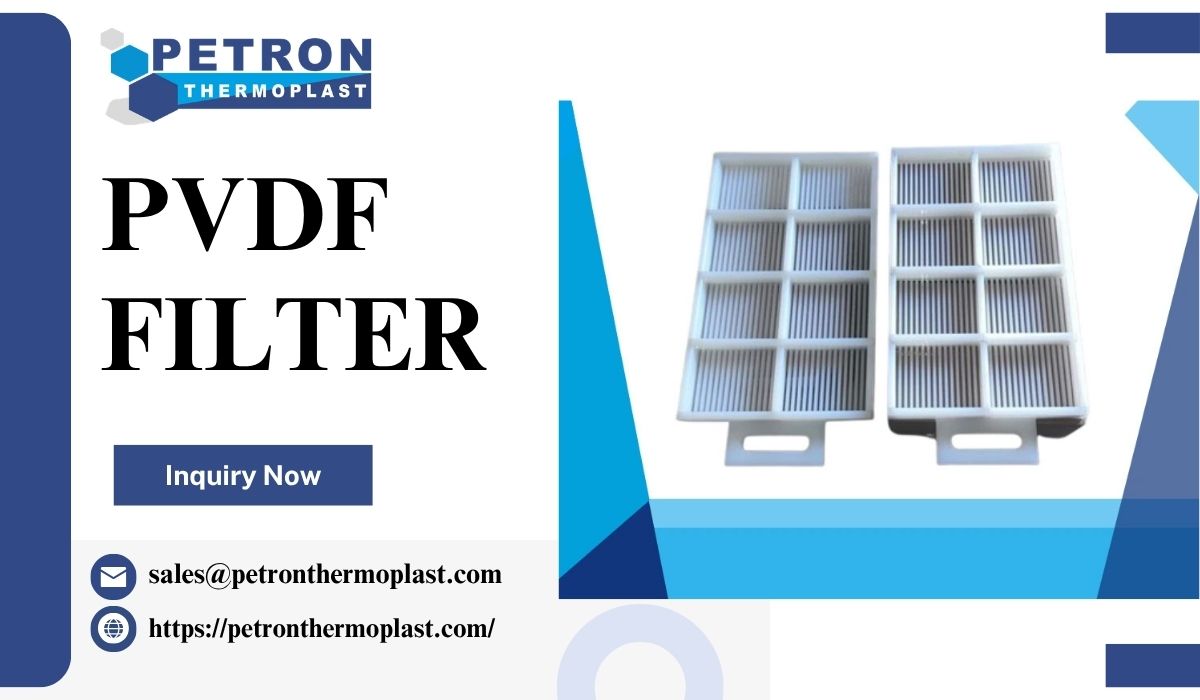
Industrial manufacturing processes rely on clean and contaminant-free fluids to ensure consistent production, equipment reliability, and product quality. Whether handling aggressive chemicals, high-purity liquids, acids, alkalis, or specialty process media, an efficient filtration system plays a critical role in protecting pipelines and process equipment. A PVDF Filter for Industrial Process Fluid Purification is designed to remove suspended particles and contaminants from compatible process fluids while providing excellent corrosion resistance in demanding industrial environments.
PVDF (Polyvinylidene Fluoride) is a high-performance fluoropolymer known for its outstanding resistance to many corrosive chemicals, excellent mechanical strength, and long service life. These characteristics make PVDF filters suitable for a wide range of industrial applications, including chemical processing, pharmaceutical manufacturing, semiconductor production, water treatment, electroplating, metal finishing, and specialty chemical industries.
Selecting the right PVDF filter helps improve process efficiency, protect downstream equipment, reduce maintenance requirements, and support uninterrupted industrial operations.
What Is a PVDF Filter?
A PVDF filter is a corrosion-resistant filtration unit designed to remove unwanted solid particles from compatible industrial process fluids. Installed within the piping system, it captures contaminants before they reach sensitive equipment such as pumps, valves, flow meters, heat exchangers, dosing systems, and reactors.
Depending on the application, a PVDF filter may consist of:
- PVDF filter housing
- Filter basket or cartridge
- Internal support structure
- Cover assembly
- Sealing components
- Drain connection
- Inlet and outlet ports
- Flanged or socket end connections
Importance of Process Fluid Purification
Industrial fluids often contain contaminants generated during manufacturing, storage, transportation, or pipeline installation. Even small particles can affect equipment performance, reduce operational efficiency, or damage precision instruments.
Effective fluid purification helps:
- Protect pumps from abrasive particles
- Prevent valve blockage
- Reduce equipment wear
- Maintain product quality
- Improve process reliability
- Minimize unplanned shutdowns
- Extend equipment service life
- Reduce maintenance frequency
Why Choose PVDF for Industrial Filtration?
Many industrial processes involve aggressive chemicals that can corrode conventional metallic filtration equipment. PVDF offers excellent performance in compatible corrosive environments while maintaining structural integrity over extended service periods.
Key advantages include:
- Excellent resistance to many acids and alkalis
- Corrosion-resistant construction
- High mechanical strength
- Smooth internal surfaces
- Lightweight design
- Good dimensional stability
- Low maintenance requirements
- Long operational life under suitable conditions
Applications of PVDF Filters
Chemical Processing Plants
Chemical manufacturing facilities use filtration systems throughout production lines to protect reactors, pumps, dosing systems, and transfer pipelines.
Typical applications include:
- Acid transfer systems
- Alkali processing
- Chemical circulation
- Process fluid filtration
- Storage tank outlet filtration
Water Treatment Plants
Industrial water treatment facilities require filtration before and after chemical dosing operations.
PVDF filters may be used in:
- Chemical injection systems
- Reverse osmosis pretreatment
- Demineralization plants
- Neutralization systems
- Industrial wastewater treatment
Pharmaceutical Manufacturing
Pharmaceutical production often requires contamination control and high-purity fluid handling.
PVDF filters may be considered for compatible applications involving:
- Process chemicals
- Cleaning solutions
- Utility systems
- High-purity process fluids
Semiconductor Manufacturing
Semiconductor facilities require extremely clean chemical delivery systems.
PVDF filtration components are commonly specified for compatible high-purity chemical handling applications due to their corrosion resistance and material performance.
Electroplating and Metal Finishing
Metal finishing operations involve aggressive chemical solutions that require continuous filtration to maintain bath quality.
PVDF filters help remove suspended contaminants while resisting chemical attack in compatible process environments.
Types of PVDF Filters
The filter design depends on the application and filtration requirements.
Common configurations include:
Cartridge Filters
Designed for fine particle removal using replaceable filter cartridges.
Basket Filters
Suitable for higher flow rates and larger particle retention.
Inline Filters
Installed directly within process pipelines to provide continuous filtration.
Custom Fabricated Filters
Designed according to project-specific operating conditions, connection requirements, and filtration capacities.
Process Equipment Protection
One of the primary functions of a PVDF filter is protecting downstream equipment.
Pump Protection
Particles entering centrifugal or dosing pumps can cause wear and reduce efficiency.
Installing a PVDF filter upstream helps reduce the risk of damage.
Valve Protection
Control valves and isolation valves perform more reliably when process fluids are free from debris.
Flow Meter Protection
Sensitive flow measurement devices require clean fluid for accurate readings.
Heat Exchanger Protection
Filtration helps reduce fouling caused by suspended solids.
Instrument Protection
Pressure transmitters, sensors, and analyzers benefit from cleaner process fluids.
Selecting the Correct Filter
Choosing the right PVDF filter requires evaluating several process parameters.
Chemical Compatibility
Verify that PVDF is compatible with the process fluid.
Flow Rate
The filter should accommodate the required system flow without excessive pressure loss.
Filtration Rating
The filtration element should capture particles appropriate for the application.
Pressure Rating
The complete filter assembly should meet system operating pressure requirements.
Temperature
Operating temperature must remain within the recommended service limits.
Connection Type
The filter should match the existing piping system through suitable flanged, socket, or custom connections.
Pressure Drop Considerations
All filtration systems create some pressure loss.
As contaminants accumulate inside the filter element, the pressure drop increases.
Regular monitoring helps determine when cleaning or replacement is required.
Filter sizing should balance:
- Flow capacity
- Filtration efficiency
- Acceptable pressure drop
- Maintenance intervals
Installation Guidelines
Proper installation contributes significantly to filter performance.
Recommended practices include:
- Install in the correct flow direction.
- Provide adequate pipe supports.
- Allow maintenance access.
- Follow approved joining procedures.
- Verify connection alignment.
- Avoid excessive mechanical stress.
- Pressure test before commissioning.
Maintenance Requirements
Routine maintenance helps maintain filtration efficiency.
Typical maintenance includes:
- Inspecting filter elements
- Cleaning baskets or cartridges
- Replacing damaged components
- Checking seals
- Monitoring pressure differential
- Inspecting external connections
Benefits of PVDF Filters
A properly selected PVDF filter offers several operational advantages.
Corrosion Resistance
Suitable for many compatible aggressive chemical environments.
Equipment Protection
Reduces contamination reaching downstream equipment.
Improved Product Quality
Helps maintain cleaner process fluids.
Lower Maintenance Costs
Reduces wear on pumps, valves, and instrumentation.
Long Service Life
PVDF construction provides durability in compatible applications.
Lightweight Construction
Simplifies transportation and installation.
Custom Engineering
Available in various sizes, pressure ratings, and connection configurations.
Custom PVDF Filter Solutions
Every industrial process has unique operating requirements.
Custom PVDF filters can be designed according to:
- Pipeline diameter
- Flow capacity
- Chemical compatibility
- Pressure requirements
- Temperature conditions
- Filtration rating
- Connection standards
- Installation space
Why Choose Petron Thermoplast?
Petron Thermoplast manufactures and supplies high-performance thermoplastic process equipment for demanding industrial environments.
The product portfolio includes:
- PVDF Filters
- PVDF Pipe Fittings
- PVDF Pipes
- PVDF Ball Valves
- PVDF Butterfly Valves
- PVDF Check Valves
- PVDF Y Strainers
- PVDF Fabricated Components
- Custom Chemical Process Equipment
Conclusion
Industrial process plants require efficient fluid purification to protect equipment, maintain product quality, and ensure uninterrupted operations. A PVDF Filter for Industrial Process Fluid Purification provides a dependable filtration solution for compatible corrosive chemical applications where conventional materials may not offer adequate resistance.
Whether installed in chemical processing facilities, pharmaceutical plants, semiconductor manufacturing units, water treatment systems, or metal finishing operations, PVDF filters help remove contaminants before they reach sensitive equipment. Their corrosion-resistant construction, mechanical strength, and compatibility with many aggressive chemicals make them suitable for demanding industrial environments.
Petron Thermoplast supplies custom-engineered PVDF filters designed to meet the requirements of industrial process plants. Available in multiple sizes, filtration ratings, and connection configurations, these filters can be integrated into new installations, plant expansion projects, and pipeline upgrades. By selecting the correct filter design, verifying chemical compatibility, and following proper installation and maintenance practices, industries can achieve reliable process fluid purification, improved equipment protection, and enhanced operational efficiency.