

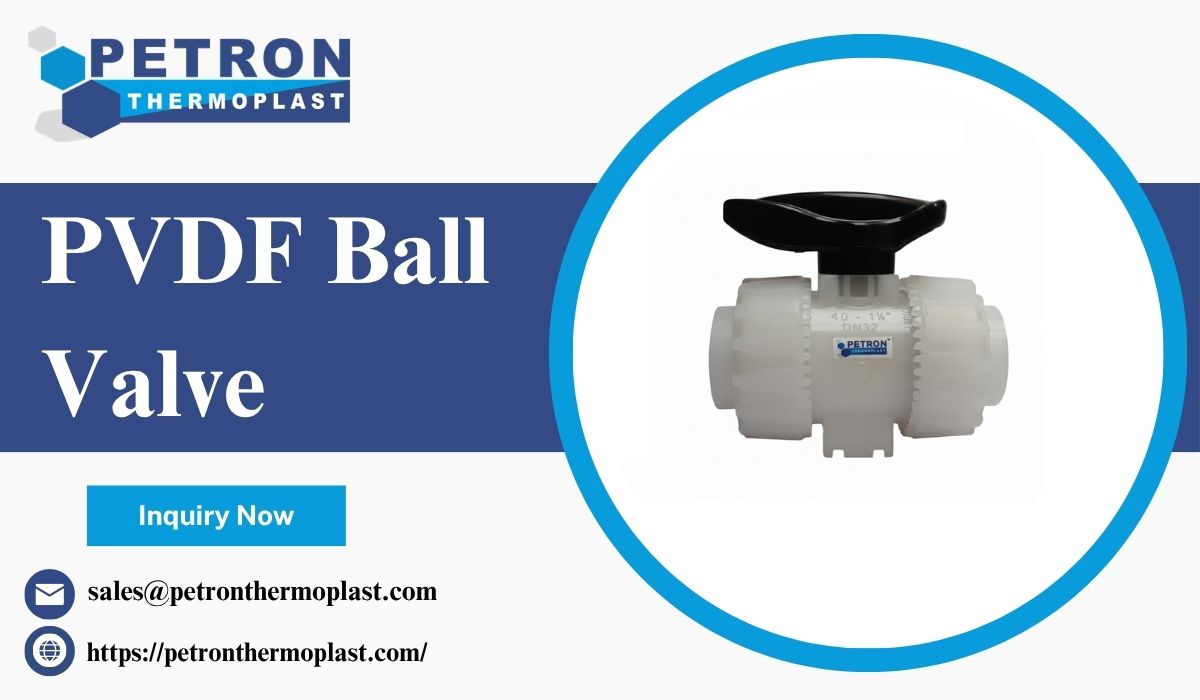
A PVDF Ball Valve for Corrosive Chemical Transfer Lines is designed for industrial piping systems where reliable fluid isolation and resistance to aggressive chemical media are essential. Chemical processing plants, water treatment facilities, pharmaceutical manufacturers, semiconductor industries, and other process plants frequently handle corrosive fluids that can cause deterioration of conventional valve materials.
In these applications, selecting the correct valve material is critical for maintaining process safety, minimizing leakage risks, and supporting reliable operation. PVDF, or polyvinylidene fluoride, is a high-performance thermoplastic known for its chemical resistance and suitability for demanding fluid handling applications. A PVDF ball valve uses a quarter-turn operating mechanism to provide efficient on-off control and isolation of compatible chemical fluids.
When correctly specified according to the chemical composition, concentration, temperature, pressure, and flow conditions, PVDF ball valves can be integrated into chemical transfer pipelines as part of a corrosion-resistant thermoplastic piping system.
What Is a PVDF Ball Valve?
A PVDF ball valve is a quarter-turn valve manufactured with PVDF components designed for compatible chemical and industrial fluid handling applications. The valve uses a spherical ball with a central bore. When the valve is fully open, the bore aligns with the pipeline to allow fluid flow. When the handle is rotated 90 degrees, the ball turns and blocks the flow path.
This simple operating principle makes ball valves suitable for applications requiring quick isolation of process lines.
A typical PVDF ball valve assembly may include:
- PVDF valve body
- PVDF ball
- Valve stem
- Sealing components
- Seats
- Handle or actuator
- End connections
Importance of Corrosion Resistance
Corrosion is a major concern in chemical transfer systems. Aggressive chemicals can attack unsuitable metallic or polymeric materials, potentially leading to leakage, reduced service life, and unexpected maintenance.
PVDF offers excellent resistance to many chemicals and can be considered for applications involving aggressive process media. However, chemical compatibility must always be evaluated for the specific chemical, concentration, operating temperature, and exposure conditions.
Using a chemically compatible valve can help maintain the integrity of the process piping system and reduce corrosion-related maintenance requirements.
How a PVDF Ball Valve Works?
The operating mechanism of a PVDF ball valve is relatively simple.
When the valve is in the open position, the internal passage through the ball aligns with the pipeline, allowing the process fluid to pass through.
When the valve is rotated to the closed position, the ball turns approximately 90 degrees, positioning the solid section across the flow path and stopping fluid movement.
This quarter-turn operation provides:
- Fast on-off isolation
- Simple operation
- Compact valve configuration
- Low operating complexity
- Convenient maintenance access
Applications in Chemical Transfer Lines
PVDF ball valves can be used in various industries where compatible corrosive fluids are transferred through thermoplastic piping systems.
Chemical Processing Plants
Chemical manufacturing facilities often transport acids, chemical solutions, and process fluids between storage tanks and production equipment. PVDF ball valves can be used for suitable isolation points within these systems.
Water Treatment
Water treatment plants may use chemical dosing and transfer systems involving compatible aggressive chemicals. PVDF valves can be incorporated into selected chemical transfer lines.
Pharmaceutical Manufacturing
Pharmaceutical processes may require high-purity fluid handling and chemically resistant components. PVDF can be considered for compatible applications where material purity and chemical resistance are important.
Semiconductor Industry
High-purity chemical distribution is critical in semiconductor manufacturing. PVDF piping and valves are widely considered in selected high-purity applications where contamination control is essential.
Industrial Wastewater Treatment
Wastewater treatment facilities may use chemicals for pH adjustment, neutralization, and other treatment processes. PVDF ball valves can be used in compatible chemical transfer applications.
Advantages of PVDF Ball Valves
PVDF ball valves offer several potential advantages for corrosive chemical transfer applications.
Excellent Chemical Resistance
PVDF is resistant to many aggressive chemicals, making it suitable for selected chemical handling applications.
Corrosion-Free Construction
As a thermoplastic material, PVDF does not rust like conventional metallic valve bodies. This can be advantageous in corrosive environments.
Quick Shut-Off
The quarter-turn mechanism enables rapid opening and closing for process isolation.
Smooth Internal Flow Path
The internal design of a ball valve can provide a relatively unobstructed flow path when fully open.
Lightweight Construction
PVDF valves are generally lighter than many metallic alternatives, which can simplify handling and installation.
High-Purity Applications
PVDF is used in selected high-purity chemical handling systems where minimizing contamination is important.
PVDF Ball Valve Selection
Choosing the correct PVDF ball valve requires evaluation of the operating conditions.
Important factors include:
- Chemical type
- Chemical concentration
- Operating temperature
- Operating pressure
- Pipe diameter
- Flow rate
- Connection type
- Valve size
- Manual or actuated operation
- Installation environment
Connection Options
PVDF ball valves can be supplied with different end connection configurations depending on the piping system.
Possible connection arrangements may include:
- Socket connections
- Flanged connections
- Threaded connections for suitable designs
- Union connections
- Other customized end configurations
Manual and Automated Operation
PVDF ball valves can be manually operated using a handle or integrated into automated process control systems using an actuator, depending on the valve design.
Manual valves are suitable for applications where operators need to isolate pipelines periodically.
Automated valves may be preferred when the process requires:
- Remote operation
- Automated chemical dosing
- Frequent cycling
- Process interlocking
- Centralized control
- Integration with PLC or SCADA systems
Use in Chemical Storage and Transfer Systems
Chemical storage tanks often require reliable isolation valves on inlet and outlet pipelines. PVDF ball valves can be considered for compatible chemical services connecting:
- Storage tanks
- Transfer pumps
- Dosing systems
- Process vessels
- Filtration units
- Chemical injection points
- Distribution headers
Installation Considerations
Correct installation is essential for reliable valve performance.
Before installation, the valve should be inspected for damage and checked for compatibility with the intended service.
Important installation considerations include:
- Correct flow line alignment
- Proper pipe support
- Avoiding excessive mechanical stress
- Correct connection procedure
- Proper tightening of flanges
- Avoiding excessive force on valve ends
- Ensuring accessibility for operation and maintenance
Maintenance of PVDF Ball Valves
PVDF ball valves generally require relatively low maintenance when correctly selected and operated within their specified limits.
Routine maintenance may include:
- Visual inspection
- Checking for leakage
- Inspecting connections
- Checking valve operation
- Inspecting seals
- Checking actuator operation, where applicable
- Cleaning external surfaces
- Verifying correct operating conditions
PVDF Ball Valve in Corrosive Chemical Piping Systems
A PVDF ball valve is typically installed as part of a larger chemical piping network. Its performance depends on the compatibility and design of the complete system.
Other components may include:
- PVDF pipes
- PVDF fittings
- PVDF strainers
- PVDF check valves
- Chemical storage tanks
- Pumps
- Dosing equipment
- Pressure instruments
- Flow sensors
Why Choose a PVDF Ball Valve for Chemical Transfer?
For suitable applications, PVDF ball valves offer a combination of chemical resistance, quick isolation, and thermoplastic construction. Their quarter-turn operating principle makes them convenient for on-off control, while the PVDF material can provide resistance to many aggressive chemical environments.
However, proper engineering remains essential. The valve should be selected based on actual chemical compatibility, pressure and temperature ratings, pipe size, connection requirements, and operational needs.
For critical applications, chemical compatibility data and manufacturer recommendations should be reviewed before final specification.
PVDF Ball Valve for Corrosive Chemical Transfer Lines
A PVDF Ball Valve for Corrosive Chemical Transfer Lines can provide reliable on-off isolation for compatible chemical handling systems across chemical processing, water treatment, pharmaceutical, semiconductor, and industrial wastewater applications.
The chemical resistance of PVDF makes it a suitable material option for many demanding fluid handling environments, while the quarter-turn ball valve design allows fast and straightforward pipeline isolation. Available connection configurations can also enable integration with thermoplastic piping systems and industrial equipment.
Petron Thermoplast offers PVDF valve and piping solutions for industrial applications requiring corrosion-resistant thermoplastic components. PVDF ball valves can be specified for chemical transfer lines, storage tank connections, dosing systems, process piping, and other compatible applications.
For the best performance, the valve should be selected based on the exact chemical composition, concentration, operating temperature, pressure, flow conditions, and connection requirements. With correct material selection, proper installation, and appropriate maintenance, PVDF ball valves can support reliable chemical transfer and efficient process isolation in demanding industrial piping systems.