

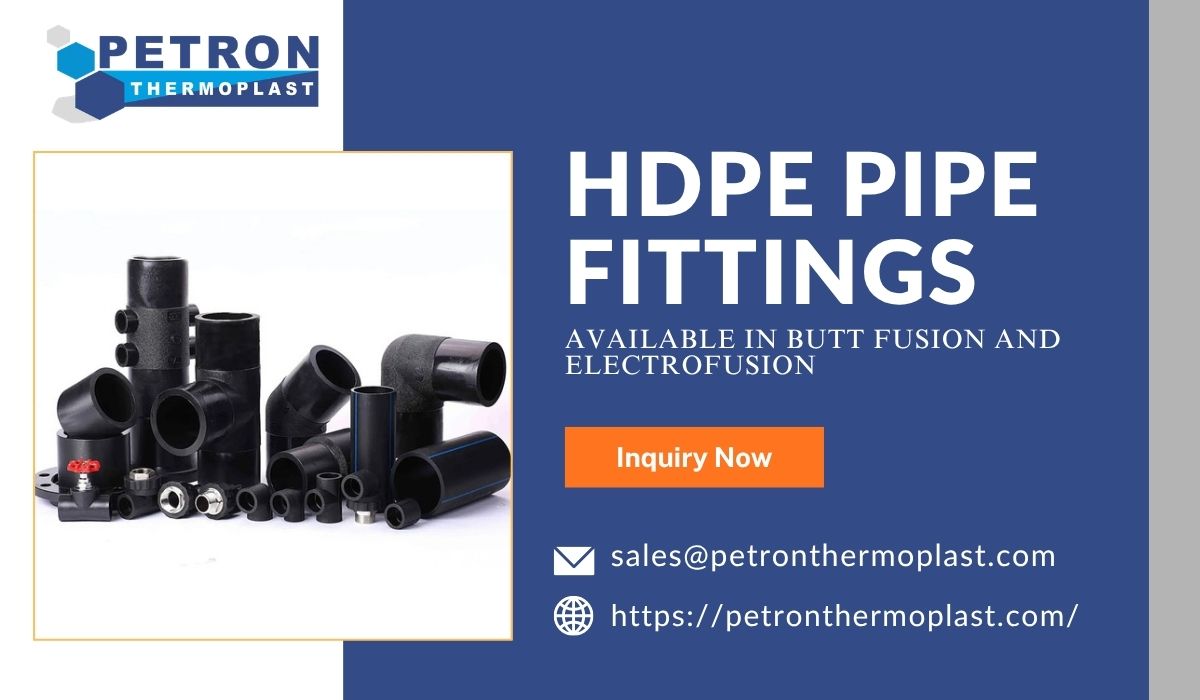
Modern industrial facilities need piping systems that can handle continuous fluid movement, changing operating conditions, and demanding installation environments. From chemical processing plants and water treatment facilities to manufacturing units and industrial utility systems, reliable piping components are essential for maintaining smooth operations. HDPE pipe fittings are widely used in suitable industrial piping applications because of their corrosion resistance, lightweight construction, flexibility, and durability. These fittings help connect HDPE pipes, change pipeline direction, create branches, transition between pipe sizes, and connect piping with equipment.
For companies planning a new industrial pipeline, plant expansion, maintenance work, or bulk procurement, choosing the correct HDPE pipe fittings is an important part of the overall piping design. Petron Thermoplast provides HDPE pipe fittings and thermoplastic piping solutions for different industrial requirements.
What Are HDPE Pipe Fittings?
HDPE stands for High-Density Polyethylene. It is a thermoplastic material commonly used for piping systems where resistance to corrosion and environmental conditions is important. HDPE pipe fittings are components used to connect HDPE pipes and create different pipeline configurations. They are available in several designs and sizes depending on the application.
Common HDPE fittings include:
- HDPE Elbows
- HDPE Tees
- HDPE Reducers
- HDPE Couplings
- HDPE Flanges
- HDPE Stub Ends
- HDPE End Caps
- HDPE Cross Fittings
- HDPE Fabricated Fittings
- HDPE Pipe Spools
Why HDPE Pipe Fittings Are Suitable for Industrial Applications?
Industrial piping systems can be exposed to water, chemicals, moisture, temperature variations, mechanical stress, and outdoor conditions. HDPE provides several characteristics that make it suitable for selected industrial applications.
Corrosion Resistance
HDPE is resistant to rust and corrosion. This is particularly useful in environments where metallic piping may be exposed to moisture or corrosive substances.
For chemical applications, buyers should verify compatibility with the specific chemical, concentration, temperature, and operating conditions before selecting HDPE.
Lightweight Construction
HDPE fittings are relatively lightweight compared with many metal alternatives. This makes transportation, handling, and positioning easier during installation.
For large projects requiring significant quantities of fittings, easier handling can also simplify material movement around the worksite.
Flexibility
HDPE piping systems offer flexibility that can be useful for certain industrial installations. The ability of the piping system to accommodate some movement can be beneficial in appropriate applications.
However, the actual design must account for installation conditions, supports, thermal movement, pressure, and mechanical loads.
Low Maintenance
HDPE does not rust like conventional steel piping. When correctly selected and installed, it can reduce maintenance associated with corrosion.
Regular inspection is still necessary to identify physical damage, leakage, connection issues, or changes in operating conditions.
Long-Term Performance
HDPE is commonly selected for applications where resistance to environmental exposure and corrosion is important. Proper material selection, joining, installation, and operating conditions are essential for dependable service.
Applications of HDPE Pipe Fittings
HDPE fittings are used across different industries where their material properties match the requirements of the application.
Water Treatment Plants
Water treatment facilities use extensive piping networks to transport raw water, treated water, wastewater, and process fluids.
HDPE pipe fittings can be used in suitable treatment applications because of their corrosion-resistant and lightweight characteristics.
Chemical Processing
Chemical plants often require piping materials that can handle compatible process fluids. HDPE can be considered for selected chemical applications after reviewing chemical compatibility.
The chemical concentration, temperature, pressure, and exposure conditions should be evaluated before installation.
Wastewater Systems
Wastewater may contain substances that can contribute to corrosion in some metallic piping systems. HDPE can be suitable for selected wastewater applications because of its resistance to corrosion and moisture.
Mining Industry
Mining facilities may require piping for water, slurry, and other fluids. HDPE piping systems can be used in suitable mining applications where flexibility and resistance to environmental conditions are required.
Industrial Fluid Transfer
Manufacturing and processing plants often need pipelines to transfer fluids between tanks, pumps, machines, and other equipment.
HDPE fittings can help create the required pipeline arrangement when the material and fitting specifications are appropriate for the service.
How to Choose the Right HDPE Pipe Fittings?
Selecting fittings requires more than simply choosing the correct diameter. Several technical factors should be considered.
Pipe Size
The fitting must correspond to the required pipe diameter and applicable dimensional specification.
Pressure Requirements
The expected operating pressure should be reviewed against the applicable pressure limitations of the selected components and the complete piping system.
Temperature
Operating and environmental temperatures should be considered because thermoplastic properties can change with temperature.
Fluid Compatibility
The transported fluid must be compatible with HDPE under the actual operating conditions. This is especially important for chemical applications.
Joining Method
HDPE piping systems can use different joining methods, including butt fusion, electrofusion, and mechanical connections.
The fitting should be suitable for the intended joining method and installation procedure.
Installation Environment
Whether the pipeline is installed above ground, underground, indoors, outdoors, or in a demanding industrial environment can affect fitting selection and system design.
Importance of Proper Installation
Even high-quality HDPE fittings require correct installation to achieve reliable performance.
Before installation, pipes and fittings should be checked for damage and contamination. Joining surfaces should be clean and prepared according to the selected joining procedure.
For fusion joining, proper alignment, heating, pressure, cooling, and equipment settings are important. Installation should be performed by trained personnel using appropriate equipment.
Mechanical connections should also be assembled according to the applicable manufacturer’s recommendations.
Industrial piping installations should follow project specifications, relevant standards, and recommended installation procedures.
Bulk HDPE Pipe Fittings for Industrial Projects
Large industrial plants can require substantial quantities of elbows, tees, reducers, couplings, flanges, and other fittings.
Bulk procurement can help project teams organize materials and coordinate deliveries.
Before placing a bulk order, buyers should prepare a detailed requirement list containing:
- Fitting type
- Size
- Quantity
- Pipe specification
- Joining method
- Application
- Delivery requirements
- Packaging requirements
- Documentation requirements
Petron Thermoplast for HDPE Pipe Fittings
Petron Thermoplast provides thermoplastic piping products and solutions for industrial applications, including HDPE pipe fittings.
The company supports requirements for industrial piping projects, fluid transfer systems, plant installations, maintenance applications, and bulk procurement.
Customers can discuss their requirements based on pipe size, fitting type, connection method, quantity, application, and project specifications.
For customized industrial requirements, providing drawings and detailed technical information can help identify suitable HDPE fittings and configurations.
Maintenance of HDPE Piping Systems
HDPE piping systems can offer relatively low-maintenance operation when properly designed and installed. However, periodic inspection remains important.
Maintenance teams should check for:
- Leakage
- Physical damage
- Connection problems
- Unusual movement
- Improper supports
- Abrasion
- Changes in operating conditions
Conclusion
Modern industrial piping systems require components that are compatible with their operating conditions and installation requirements. HDPE pipe fittings can be a practical choice for suitable applications because of their corrosion resistance, lightweight construction, flexibility, and low-maintenance characteristics.
They can be used in water treatment, wastewater management, chemical processing, mining, manufacturing, and industrial fluid transfer applications when their specifications match the service conditions. Before purchasing HDPE pipe fittings, buyers should evaluate pipe dimensions, pressure, temperature, fluid compatibility, joining method, installation environment, and project quantity.
For industrial projects requiring standard, customized, or bulk piping components, Petron Thermoplast offers HDPE pipe fittings and thermoplastic piping solutions designed around different project requirements. Proper product selection, installation, and maintenance can help create an efficient and dependable industrial piping system.