

Few rhythms travel as far as the one that began on the Caribbean coast of Colombia. Its pulse has crossed borders, inspired new genres, and remained a fixture at celebrations for generations. The cumbia dance is more than a set of steps. It is a living story of cultures meeting, and understanding that story makes the dance far more rewarding to learn.
Three Cultures, One Sound
Historians generally trace the music to the Colombian coast, where Indigenous, African, and Spanish traditions blended over centuries. Indigenous communities contributed flutes and melodic ideas, African traditions brought the drumming and call-and-response patterns, and Spanish influence added instruments, costume, and song forms. The result was a rhythm that carried each heritage inside it. Britannica’s overview of cumbia offers a good summary of this blended history for readers who want to explore further.
The Instruments Behind the Beat
Traditional ensembles rely on a few distinctive sounds. The gaita, a long vertical flute, carries the melody. Drums such as the tambor alegre and the llamador keep the pulse, while maracas and guacharaca add texture. Later versions introduced accordions, brass, and electric instruments, which helped the sound spread across Latin America. Every region added its own flavour, creating Mexican, Peruvian, and Argentine variations that sound different yet share the same gentle swing.
How the Dance Looks and Feels
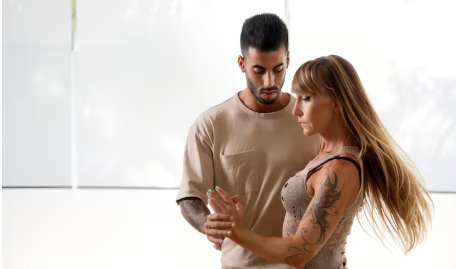
Historically, the cumbia dance told a story of courtship. Dancers moved in a gentle circle, with a graceful, flowing style that rewarded rhythm over speed. Women often held wide skirts and glided in small steps, while men circled with hats and respectful gestures. Today, the social version is more relaxed, with partners dancing in pairs and keeping a steady side-to-side motion.
What stays constant is the feel. The movement is grounded and smooth, with a slight sway in the hips and soft, small steps that follow the drum.
Learning the Basic Step
The beauty of the style is how approachable it is. A common beginner pattern goes like this:
- Step forward with your left foot on count one.
- Shift your weight back to the right foot on count two.
- Step back with the left foot on count three.
- Step in place with the right foot on count four.
Keep your knees soft and your steps small. Let your hips move naturally with your weight, and listen for the steady pulse of the drum. If you have ever struggled to feel the beat in faster Latin dances, this one is a gentle place to start.
Why It Suits Beginners and Seasoned Dancers Alike
Because the pace is moderate, newcomers can focus on rhythm and posture without feeling rushed. Experienced dancers, meanwhile, enjoy the musicality, layering in turns, shines, and playful footwork. Many studios in Southern California teach it as an approachable introduction before moving on to faster partner styles. That is why the cumbia dance is so often recommended for first-time students. If you want guided practice, a studio that teaches cumbia dance classes gives you a friendly environment and an instructor who can correct small habits early.
Benefits Beyond the Music
Learning this style supports coordination, balance, and cardiovascular fitness, yet most people say the biggest gain is mood. Dancing to warm, rhythmic music is hard to do without smiling. It also connects you to a cultural tradition, which gives practice a sense of meaning that a standard workout rarely offers.
Social settings help too. Dancing in a group builds confidence, and the shared rhythm creates quick friendships. Even a short evening of practice can leave you feeling lighter and more connected. Regular practice of the cumbia dance is a gentle way to improve coordination without the pressure of a high-intensity workout.
Respecting the Culture While You Learn
Because this rhythm carries deep cultural meaning, approach it with curiosity. Listen to classic recordings, learn the names of the instruments, and ask your instructor about the regional styles. The more you understand where the movement comes from, the more respectful and expressive your dancing will become.
Regional Styles Worth Exploring
Once you are comfortable with the Colombian foundation, listening to other regions is a delight. Mexican versions feature brighter accordions and a quicker, bouncier feel. Peruvian styles blend the rhythm with electric guitars and a psychedelic edge. Argentine versions bring a rougher, working-class energy. Exploring these variations deepens your appreciation of the cumbia dance and gives you plenty of new music to practise with.
Tips for Your First Social
Keep your steps small, smile, and focus on the beat instead of worrying about what others think. The cumbia dance is forgiving, so even simple movement looks good when it stays in rhythm.
Conclusion
The cumbia dance has survived for generations because it is simple to learn and rich in meaning. Its steady rhythm welcomes newcomers, while its history gives experienced dancers endless depth. Whether you are drawn by the music, the culture, or the chance to try something new, the best way to begin is to listen, start small, and let the drum guide your feet.