

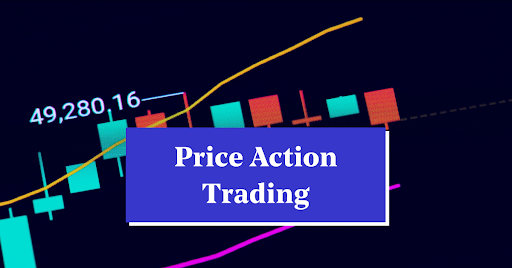
In the bustling world of trading, where every tick in the market can mean the difference between profit and loss, many traders find themselves overwhelmed by the myriad of indicators and complex strategies. But what if I told you that understanding market movements could be as straightforward as observing the price itself? Welcome to the world of price action trading. In this article, we’ll delve into how you can navigate this trading methodology and decode market dynamics without the confusion of overly complicated charts and indicators.
What is Price Action Trading?
At its core, price action trading is a method where traders analyze and interpret the price movements of a security. Instead of relying on lagging indicators, traders using this approach focus on the actual price changes. It’s a back-to-basics strategy, where the price tells the story, and the reader seeks to understand it.
Why would a trader want to simplify their approach? It’s simple: by honing in on price movements, you can make decisions based on real-time data, allowing for quicker and potentially more accurate trading responses.
The Beauty of Simplicity
There’s something liberating about a minimalist approach to trading. With price action trading, you’re stripped of clutter. You don’t need a dozen indicators flashing on your screen. Instead, you focus on candles. Yes, those beautiful little bars of price movement. Each candlestick represents buying and selling activities within a set period, and watching them closely can provide valuable insights.
What makes this approach really shine is its ability to adapt. While some traders may need to comb through heaps of data and complex algorithms, you simply need to observe. It’s this flexibility that makes price action trading a favorite among many.
Understanding Candlestick Patterns
Anyone who has dabbled into price action trading would eventually come across candlestick patterns. But, what are these patterns, and why should you care?
Candlestick patterns, like the doji or hammer, can give you hints about future market behavior. For instance, a doji indicates indecision in the market, while a hammer might suggest a potential reversal. Instead of getting bogged down by statistics, you can simply watch for these shapes and make your trading decisions accordingly.
Imagine sitting at your favorite café, nursing your latte while evaluating the markets. You look at a chart and notice a hammer pattern. Instead of jumping into a trade immediately, you take a moment to consider the context. Is it within an established trend? What’s the sentiment around it? Using simple questions and patterns like this can guide your trading journey.
Key Price Action Patterns to Know
When you step into the realm of price action trading, not all patterns are created equal. Here are a few standout price action patterns you should keep your eyes peeled for:
- Pin Bar: A candlestick with a long wick and a small body, indicating a potential reversal.
- Engulfing Pattern: A larger candle that completely engulfs the previous candle, often signaling a strong trend direction change.
- Inside Bar: This pattern shows a price consolidation followed by a possible breakout. It’s like coiling a spring—ready to explode.
- Breakout: When the price breaks above a resistance level or below a support level, it often leads to significant price movements.
These patterns are not foolproof, but recognizing them can help you make informed decisions without getting lost in complex strategies.
Risk Management in Price Action Trading
You could have the most accurate price action trading skills in the world, but without proper risk management, you’re just walking a tightrope without a safety net. Here’s how you can protect yourself:
- Position Sizing: Never risk more than a small percentage of your trading capital on a single trade. This way, you ensure that even if you face a series of losses, you’re still in the game.
- Stop-Loss Orders: Using stop-losses can help mitigate losses on trades that don’t go your way. You set a predetermined price point where you’ll exit, minimizing potential damage.
- Emotional Control: Trading is as much about your mindset as it is about the price. You need to stay calm and stick to your strategy, regardless of how the market tries to shake you.
Remember, it’s not about making huge profits all the time. It’s about protecting your capital and allowing it to grow steadily.
The Role of Market Context
One of the most underrated aspects of price action trading is understanding market context. Just because a candlestick pattern suggests a buy does not mean you should act immediately. You must consider the bigger picture. Factors like economic news, market sentiment, and even geopolitical events can sway market movements.
Imagine you’re at a cricket match, and a bowler is gearing up for an important delivery. The crowd’s energy, the match condition, and even the players’ form are all as crucial as the bowler’s technique. Similarly, the overall market environment should influence your trading decisions.
Putting It All Together
Embarking on your journey into price action trading is not just about memorizing patterns or understanding candlesticks. It’s about building a comprehensive view of the market. You look at price movements, recognize patterns, manage risks, and assess the context.
Using these elements together creates a holistic trading experience—one that can feel more intuitive rather than mechanical. As you become more comfortable, you’ll find that price action trading is a rhythm, one that allows you to connect with the market in a more meaningful way.
Continuous Learning and Adaptation
In the world of trading, things never remain stagnant. Markets evolve, and so should your strategies. While price action trading is a fantastic starting point, don’t hesitate to expand your knowledge. Consider learning about other trading methodologies, experimenting with different markets, or even joining trading communities.
Remember, the journey is ongoing. Each trade is a lesson, and each market movement is a step towards becoming a more adept trader.
Conclusion
Navigating the markets doesn’t have to be as complicated as it seems. With price action trading, you can simplify your approach and focus on what truly matters—the price movements. By understanding price action patterns, managing risks effectively, and remaining adaptive, you can make informed trading decisions without the burden of complex indicators.
So, next time you face a financial chart, remember to look closely at the price. It just might be telling you more than you realize. Happy trading!