
Every industrial piping system has its own design requirements. Equipment positions, available installation space, pipe diameters, flow direction, and operating conditions all influence how a pipeline is assembled. Best UPVC Pipe Fittings for Customized Pipeline Layouts is an important consideration for industries looking to build reliable piping networks that match their project specifications.
UPVC pipe fittings help connect pipeline sections, change flow direction, create branch connections, and join pipes of different sizes. They are used in compatible water distribution systems, wastewater treatment facilities, industrial utilities, and selected chemical-handling applications. Choosing the correct fitting configuration can simplify installation and support dependable system performance.
Petron Thermoplast provides UPVC pipe fitting solutions for industrial requirements. By identifying the required sizes, fitting types, connection methods, and operating conditions before ordering, project teams can plan their piping layouts more effectively and reduce avoidable procurement errors.
What Are UPVC Pipe Fittings?
UPVC stands for unplasticized polyvinyl chloride. It is a rigid thermoplastic material used in piping systems where its mechanical properties and chemical compatibility suit the application. UPVC pipe fittings are components designed to connect pipes and create the required pipeline configuration. Depending on the system design, they can change direction, divide flow, connect different pipe diameters, or close the end of a pipeline.
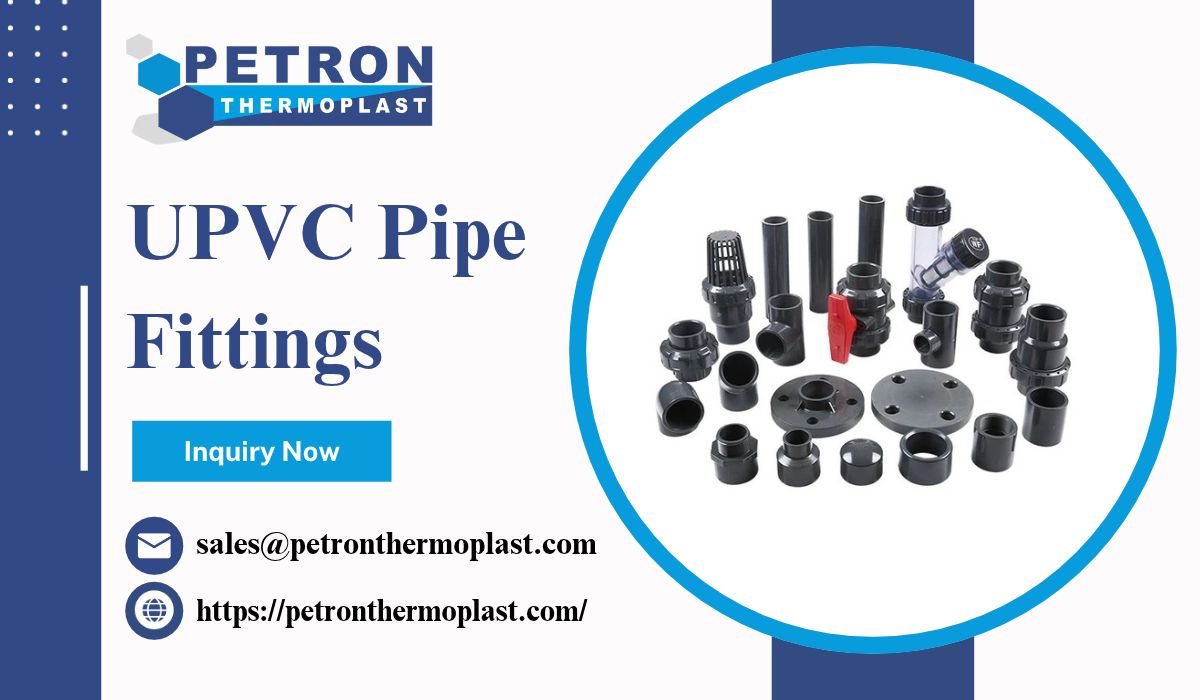
Common UPVC fittings include elbows, tees, reducers, couplings, sockets, unions, end caps, and flanges. Each component performs a specific function, so the correct selection depends on the pipeline layout and the equipment being connected.
UPVC is resistant to rust and offers useful chemical resistance in suitable conditions. However, it is not compatible with every chemical or operating temperature. Pressure rating, temperature limits, fluid composition, and applicable standards must be verified before installation.
Why Customized Pipeline Layouts Need the Right UPVC Fittings?
A standard piping arrangement may not fit every industrial facility. Some projects have limited space, complex equipment connections, several branch lines, or different pipe sizes throughout the system.
Selecting appropriate UPVC pipe fittings helps address these requirements.
- Better Space Utilization
Industrial facilities often have pipes running around machinery, walls, structural supports, and other equipment. Suitable elbow configurations and connection arrangements can help engineers plan around these obstacles.
- Flexible Pipeline Design
Tees, reducers, unions, and other fittings allow the pipeline to follow the approved design. They help connect different sections without requiring every pipe run to remain straight.
- Easier Equipment Connections
Pumps, tanks, valves, filters, and treatment equipment may require specific connection positions. Correctly selected fittings can help align the pipeline with the equipment connections.
- More Organized Installation
Preparing a fitting schedule before installation helps contractors identify required components, sizes, and quantities. This can reduce confusion during procurement and assembly.
- Improved Maintenance Planning
Unions and suitable connection arrangements can make selected sections easier to disconnect for servicing. Maintenance access should be considered during the design stage rather than after installation.
Types of UPVC Pipe Fittings for Customized Layouts
Different fitting types help create the required piping configuration.
- UPVC Elbows
UPVC elbows change the direction of a pipeline. Common configurations include 45-degree and 90-degree elbows, depending on the product range.
They are useful when the pipeline needs to turn around structural elements or connect equipment positioned at an angle. The correct elbow should be selected according to the approved layout and the required flow path.
- UPVC Tees
Tees create a branch connection from a main pipeline. Equal tees connect branches with matching nominal sizes, while reducing tees accommodate a smaller branch where the design requires it.
They are commonly used in distribution systems where fluid needs to reach several destinations.
- UPVC Reducers
Reducers connect pipe sections of different diameters. They help accommodate changes in line size required by the process or equipment design.
The appropriate reducer configuration depends on the piping arrangement, connected equipment, and flow requirements.
- UPVC Couplings and Sockets
Couplings and sockets join compatible pipe sections or connect pipes with other components. They are useful in new installations, extensions, and certain repair applications.
Connection dimensions and joining methods should match the specified piping system.
- UPVC Unions
Unions allow compatible sections of a pipeline to be disconnected without cutting the pipe. They may be useful near pumps, valves, instruments, and other equipment that requires periodic maintenance.
- UPVC Flanges
Flanges provide a connection between compatible pipeline sections, valves, tanks, or equipment. Flange dimensions, bolt patterns, gaskets, and pressure ratings must match the connected components.
- UPVC End Caps and Plugs
End caps and plugs close pipeline openings where required by the design. Their suitability depends on the connection type and operating conditions.
For pressurized service, the selected fitting must have an appropriate rating for the system.
Applications of UPVC Pipe Fittings in Industrial Pipeline Layouts
Water Treatment Plants
Water treatment facilities use interconnected pipelines to move water between treatment stages, storage tanks, and distribution systems. UPVC fittings may be suitable for compatible water-handling applications.
Wastewater Treatment Systems
Treatment plants often require multiple branches, changes in direction, and connections between process equipment. Suitable UPVC fittings can support these layouts when the wastewater composition and operating conditions are compatible with the material.
Chemical Processing Facilities
Some chemical processing operations use UPVC piping for compatible fluids. Before specifying UPVC fittings, engineers should verify the chemical concentration, temperature, pressure, and exposure conditions.
Industrial Manufacturing Units
Factories may use piping systems for water distribution, utilities, and selected process services. Appropriate fittings help connect different sections of the network around machinery and production equipment.
Commercial and Infrastructure Projects
Commercial buildings and infrastructure facilities may use UPVC fittings in suitable water distribution and utility applications. Product selection should follow the applicable design requirements and local regulations.
Industrial Equipment Connections
UPVC fittings can connect compatible pumps, tanks, filters, valves, and other equipment where the pipeline material and operating conditions permit their use.
Benefits of Choosing Suitable UPVC Pipe Fittings
The right fitting selection can offer several practical advantages for industrial projects.
- Corrosion resistance: UPVC does not rust like conventional iron-based materials.
- Lightweight handling: Components are generally easier to transport and position than many metal alternatives.
- Flexible pipeline arrangements: Different fitting configurations help accommodate approved layout requirements.
- Installation convenience: Compatible joining systems can support straightforward assembly when installed correctly.
- Reduced corrosion-related maintenance: Suitable UPVC systems can avoid certain maintenance issues associated with metallic corrosion.
- Consistent connections: Matching fittings to the specified pipe system supports compatibility across the installation.
- Project planning support: A detailed fitting schedule helps teams coordinate material procurement and installation.
Why Choose Petron Thermoplast for UPVC Pipe Fittings?
Petron Thermoplast offers UPVC pipe fitting solutions for industrial piping requirements. Project teams can share their specifications to discuss suitable product options for planned pipeline layouts. When requesting a quotation, provide the fitting types, nominal sizes, quantities, connection details, application, and operating conditions. Drawings or a bill of materials can help clarify the required configuration, particularly for large industrial installations.
Petron Thermoplast supports inquiries for project-based and bulk requirements. Product availability, customization possibilities, technical suitability, and delivery schedules should be confirmed against the specific order.
Conclusion
The best UPVC pipe fittings for customized pipeline layouts are those that match the approved design, operating conditions, pipe dimensions, and equipment connections. Elbows, tees, reducers, couplings, unions, and flanges each serve different functions in building a practical piping network.
Before selecting fittings, verify material compatibility, pressure and temperature limits, connection standards, and installation requirements. Careful planning can improve installation coordination and help reduce unnecessary procurement problems. Petron Thermoplast welcomes inquiries for UPVC pipe fitting requirements. Share your project specifications to discuss suitable options for your industrial piping installation.