

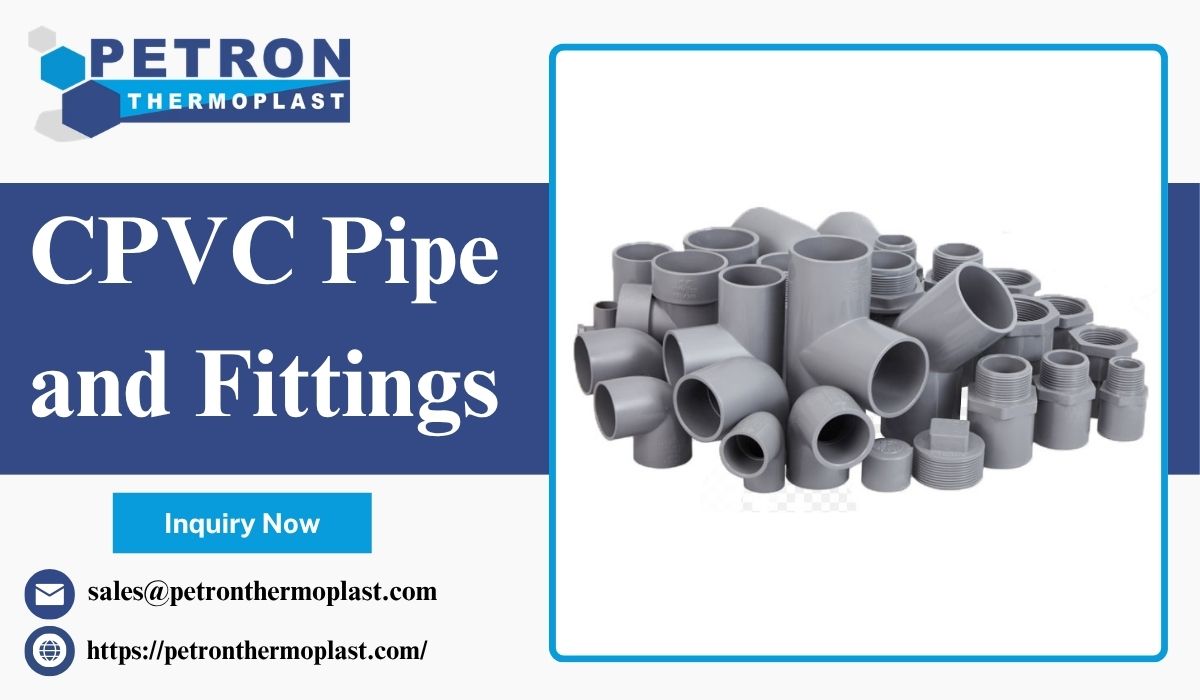
Industrial piping systems are the backbone of manufacturing facilities, chemical processing plants, water treatment units, and pharmaceutical operations. The efficiency and safety of these systems largely depend on the quality of the piping components used. Among the many materials available, CPVC pipe fittings have become one of the most trusted choices for handling corrosive chemicals, hot liquids, and demanding industrial processes.
For plant managers, selecting the right pipe fittings is not just about connecting pipes—it is about ensuring operational reliability, reducing maintenance costs, minimizing downtime, and maintaining workplace safety. Understanding the capabilities and limitations of CPVC pipe fittings helps in making informed decisions that contribute to the long-term success of industrial operations.
In this guide, we cover everything plant managers should know about CPVC pipe fittings, including their features, benefits, applications, installation considerations, and factors to evaluate before purchasing.
What Are CPVC Pipe Fittings?
CPVC (Chlorinated Polyvinyl Chloride) pipe fittings are thermoplastic components used to connect, redirect, reduce, or terminate piping systems. Manufactured through the chlorination of PVC resin, CPVC offers enhanced heat resistance, improved mechanical strength, and superior chemical compatibility compared to conventional PVC.
These fittings are widely used in industrial environments where process fluids, chemicals, and high-temperature liquids must be transported safely and efficiently.
Common types of CPVC pipe fittings include:
- Elbows
- Tees
- Reducers
- Couplers
- Unions
- Bushings
- End Caps
- Crosses
- Flanges
- Adaptors
- Ball Valve Connectors
- Threaded and Socket Fittings
Why Plant Managers Choose CPVC Pipe Fittings?
Industrial facilities demand piping systems that operate continuously with minimal maintenance. CPVC pipe fittings offer several advantages that make them a preferred choice across multiple industries.
Excellent Chemical Resistance
CPVC is resistant to a wide range of industrial chemicals, including:
- Acids
- Alkalis
- Salt solutions
- Corrosive process chemicals
- Oxidizing agents
This makes CPVC ideal for chemical processing plants, laboratories, and industrial manufacturing facilities.
High Temperature Performance
Unlike standard PVC, CPVC is designed to handle elevated operating temperatures while maintaining its structural integrity. This makes it suitable for applications involving hot process fluids and heated water systems.
Corrosion-Free Performance
Metal piping systems often suffer from rust and corrosion, leading to costly maintenance and unexpected failures. CPVC does not corrode, scale, or pit, helping extend the service life of industrial piping systems.
Lightweight Construction
CPVC fittings are significantly lighter than metal alternatives, making transportation, handling, and installation easier while reducing labor costs.
Long Service Life
When installed correctly and used within their design limits, CPVC pipe fittings provide years of reliable performance with minimal maintenance.
Key Benefits for Industrial Plants
Choosing premium-quality CPVC pipe fittings provides measurable operational advantages.
Reduced Maintenance Costs
Corrosion resistance minimizes repair requirements and extends maintenance intervals.
Increased Operational Reliability
Leak-free connections improve production efficiency and reduce unexpected downtime.
Improved Plant Safety
Reliable piping systems reduce the risk of chemical leaks and enhance workplace safety.
Lower Installation Costs
Lightweight fittings simplify installation and reduce labor time.
Better Return on Investment
Although material selection should be based on application requirements, the durability and long service life of CPVC contribute to lower lifecycle costs.
Industries That Rely on CPVC Pipe Fittings
CPVC pipe fittings are widely used across numerous industrial sectors.
Chemical Processing
Chemical plants depend on CPVC fittings for handling corrosive fluids safely and efficiently.
Water Treatment
Applications include:
- Reverse osmosis systems
- Chemical dosing units
- Demineralized water plants
- Wastewater treatment
- Effluent treatment facilities
Pharmaceutical Manufacturing
CPVC supports clean and reliable fluid transfer in pharmaceutical processing systems.
Food and Beverage
Selected process lines benefit from CPVC’s corrosion resistance and durability where compatible with process requirements.
Fertilizer Industry
CPVC pipe fittings withstand aggressive chemicals commonly used in fertilizer production.
Electroplating Plants
These fittings resist chemical attack from plating solutions and process chemicals.
Power Plants
Water treatment and chemical dosing systems frequently utilize CPVC piping components.
Important Factors Before Purchasing CPVC Pipe Fittings
Plant managers should evaluate several factors before selecting pipe fittings.
Chemical Compatibility
Verify that the process chemicals are compatible with CPVC. Reviewing chemical resistance data for the specific media and operating conditions is essential.
Operating Temperature
Confirm that the system’s operating temperature falls within the manufacturer’s recommended range for the chosen fittings.
Pressure Rating
Ensure that fittings meet the required pressure class for the intended application and comply with the piping system design.
Connection Type
Choose the appropriate connection based on installation requirements:
- Socket
- Threaded
- Flanged
- Custom fabricated
Dimensional Accuracy
Precision-manufactured fittings ensure proper alignment and leak-free installation.
Common Types of CPVC Pipe Fittings
Understanding different fitting types helps plant managers select the right components.
Elbows
Used to change pipeline direction, commonly in 45° and 90° configurations.
Tees
Allow branching of fluid flow into multiple directions.
Reducers
Connect pipes of different diameters while maintaining efficient flow.
Couplers
Join two pipes of the same diameter.
Unions
Enable easy disassembly during maintenance or equipment replacement.
Flanges
Provide secure, removable connections for pumps, valves, tanks, and equipment.
Bushings
Reduce connection sizes while maintaining compatibility between different pipe diameters.
Installation Best Practices
Proper installation is essential for maximizing the service life of CPVC pipe fittings.
Plant managers should ensure:
- Correct pipe alignment before joining
- Clean pipe ends and fitting sockets
- Use of compatible solvent cement where applicable
- Adequate curing time before pressurizing the system
- Proper support and anchoring of pipelines
- Avoidance of excessive mechanical stress on joints
- Inspection of all connections before commissioning
Maintenance Guidelines
Although CPVC requires relatively little maintenance, periodic inspections improve system reliability.
Recommended practices include:
- Inspect joints for leaks
- Check supports and clamps
- Monitor operating pressure and temperature
- Replace damaged fittings promptly
- Verify compatibility if process chemicals change
- Keep maintenance records for critical piping systems
Why Quality Matters?
Not all CPVC pipe fittings are manufactured to the same standards. Inferior products may lead to dimensional inconsistencies, poor joint performance, and reduced service life.
When evaluating suppliers, consider:
- Manufacturing experience
- Material quality
- Production capabilities
- Quality assurance procedures
- Technical support
- Custom manufacturing options
- Delivery reliability
Why Choose Petron Thermoplast?
Petron Thermoplast is a leading manufacturer of industrial thermoplastic piping products, offering a comprehensive range of CPVC pipe fittings for demanding industrial applications.
Our Advantages
- Premium-grade CPVC materials
- Precision-engineered pipe fittings
- Wide range of standard products
- Custom manufacturing capabilities
- Strict quality control procedures
- Advanced manufacturing infrastructure
- Experienced technical team
- Competitive pricing
- On-time delivery
- Support for domestic and international projects
Applications of CPVC Pipe Fittings
CPVC pipe fittings are suitable for:
- Chemical transfer systems
- Acid handling plants
- Alkali distribution networks
- Industrial water supply systems
- Cooling water pipelines
- Chemical dosing systems
- Effluent treatment plants
- Reverse osmosis facilities
- Pharmaceutical process piping
- Industrial utility services
Conclusion
For plant managers, choosing the right piping components is a strategic decision that affects plant safety, operational efficiency, maintenance costs, and long-term reliability. CPVC pipe fittings offer an excellent combination of chemical resistance, thermal stability, corrosion-free performance, and durability, making them a preferred solution for modern industrial facilities.
By selecting high-quality fittings from a trusted manufacturer, implementing proper installation practices, and following a preventive maintenance program, businesses can maximize the performance and lifespan of their piping systems.
Whether you are upgrading an existing plant or designing a new industrial facility, Petron Thermoplast provides precision-manufactured CPVC pipe fittings engineered to meet the demands of today’s process industries. Our commitment to quality, customization, and technical excellence ensures reliable piping solutions that help plant managers achieve safe, efficient, and uninterrupted operations.