

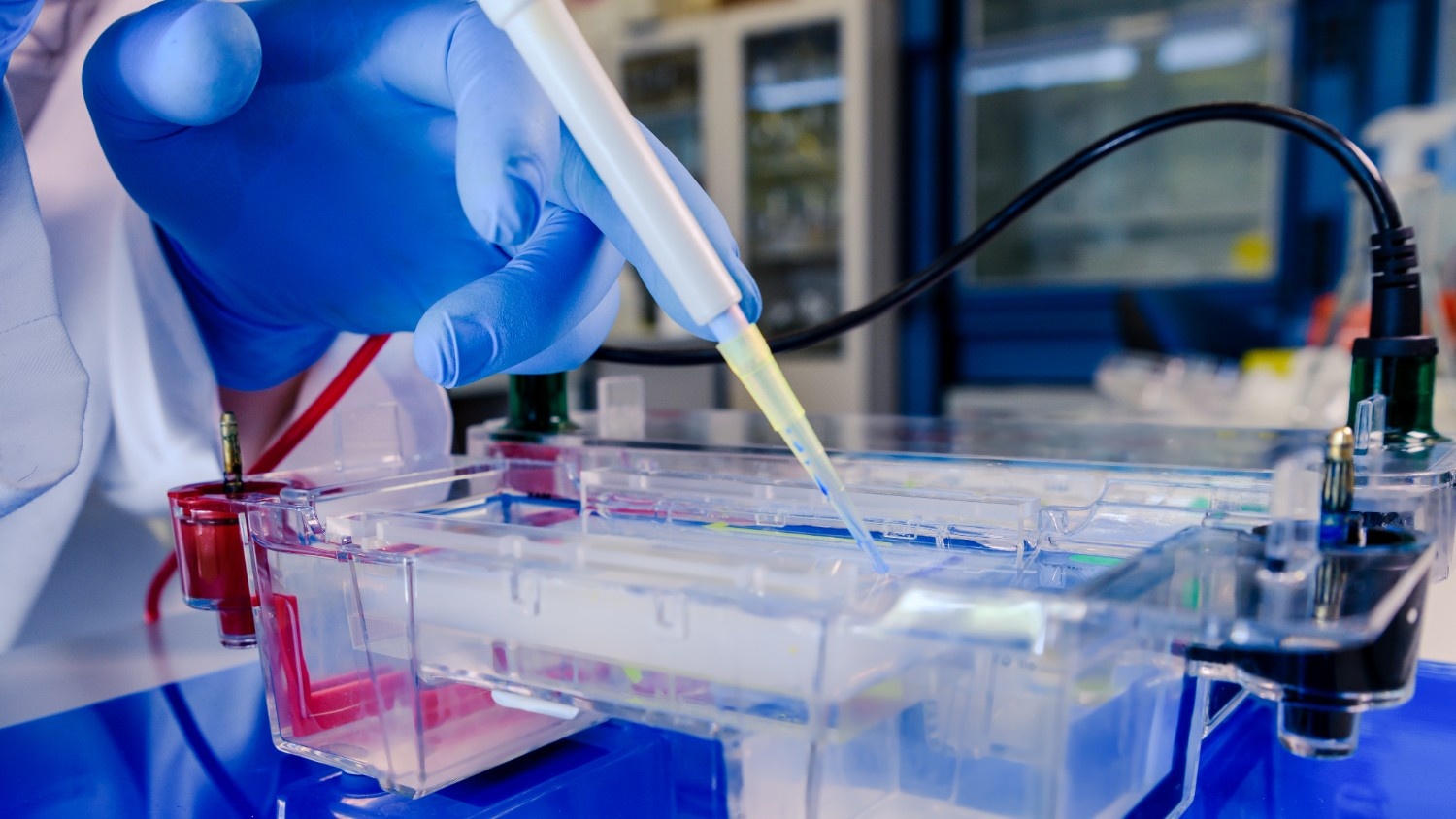
When you purify antibodies, your wash buffer plays a critical role in determining purity, recovery, and consistency. An unsuitable buffer may allow contaminants to remain bound to your column or weaken antibody interactions with the affinity ligand. By selecting the right pH, salt concentration, and buffer composition, you can remove unwanted proteins while preserving the target antibody. A systematic approach to wash buffer selection helps you achieve reliable results during Protein G column antibody purification.
Why Wash Buffer Selection Matters in Antibody Purification
Protein G affinity chromatography separates antibodies from complex samples through specific interactions between Protein G and the antibody Fc region. After loading your sample, washing removes unbound proteins, cellular debris, and weakly associated impurities before you elute the captured antibody.
Your wash buffer must balance two objectives: removing nonspecific contaminants and maintaining sufficient antibody binding to the Protein G ligand. If the buffer is too mild, impurities may remain in the column. If it is too stringent, antibody recovery may decrease because of weakened binding or unfavorable conditions.
The ideal formulation depends on your antibody subclass, sample composition, ligand characteristics, and purification goals. You should therefore evaluate buffer conditions experimentally rather than relying on a single formulation for every application.
Select a Suitable Buffer System and pH
Start by choosing a buffer system that maintains a stable pH throughout the washing process. Phosphate, Tris, and other compatible buffer systems may be suitable, depending on your purification method and downstream requirements.
For many Protein G purification workflows, a near-neutral pH is a reasonable starting point because it generally supports antibody binding. However, the optimal pH depends on the antibody and resin combination.
To select your starting conditions:
- Review the manufacturer’s recommended binding and washing conditions.
- Maintain a pH that supports antibody–Protein G interactions.
- Check whether the sample introduces substantial acidity or alkalinity.
- Evaluate antibody stability under the proposed conditions.
- Avoid large pH changes during loading and washing unless your protocol specifically requires them.
Measure the buffer pH at the working temperature when accuracy is important. Consistent pH helps reduce variation between purification runs.
Adjust Salt Concentration to Reduce Nonspecific Binding
Salt concentration influences electrostatic interactions between proteins and the chromatography matrix. Increasing ionic strength can weaken some nonspecific interactions, allowing unwanted proteins to wash away while the target antibody remains bound.
A moderate salt concentration is often a practical starting point. If your eluate contains substantial contaminating proteins, testing a higher salt concentration may improve purity.
However, excessive salt or other stringent conditions can affect antibody binding, depending on the specific system. You should test changes incrementally rather than making several adjustments simultaneously.
Compare different salt concentrations using the same sample volume, resin quantity, and wash volume. Assess antibody content in the wash fractions alongside the final eluate. This helps you determine whether the change removes contaminants without causing unacceptable product loss.
Consider Sample Type and Impurity Profile
Your sample matrix should influence your wash buffer selection. Antibodies purified from serum, hybridoma supernatants, cell culture media, or clarified lysates may contain different impurities.
For example, serum samples can contain abundant proteins that compete for space in the sample matrix or associate nonspecifically with the resin. Cell culture supernatants may contain host-cell proteins, residual media components, and other unwanted substances.
Choose your wash conditions based on the impurities you need to remove. If nonspecific protein carryover is high, consider adjusting ionic strength or evaluating a compatible additive. If your sample contains aggregates or particulate material, improve clarification before loading rather than expecting the wash buffer to correct every problem.
Evaluate Additives Carefully
Certain additives can reduce nonspecific interactions or improve sample handling. Their suitability depends on your antibody, resin chemistry, and downstream application.
Potential considerations include:
Nonionic detergents: May reduce hydrophobic interactions in compatible workflows, but require assessment of downstream compatibility.
Chelating agents: May be appropriate for some systems but should be avoided when they interfere with required metal-dependent components.
Preservatives: May support storage or handling requirements, but must be compatible with subsequent analytical or biological assays.
Do not introduce additives without checking the manufacturer’s guidance. An additive that improves purity in one application may interfere with antibody activity, mass spectrometry, cell-based assays, or other downstream procedures.
For most method-development studies, begin with a simple buffer and introduce one additive at a time only when a specific problem justifies it.
Determine the Appropriate Wash Volume
Even a well-formulated buffer may produce inconsistent results if you use an unsuitable wash volume. Too little washing can leave impurities behind, while excessive washing increases processing time and may increase product loss under unfavorable conditions.
Express your wash volume relative to the packed resin bed volume when using a conventional column. Begin with the manufacturer’s recommended procedure, then evaluate additional wash volumes if contamination remains.
Collect wash fractions separately during development. Analyze them to determine when contaminant removal reaches an acceptable level and whether your target antibody begins appearing in the wash.
This approach helps you establish an efficient washing procedure instead of selecting a volume based on appearance alone.
Validate Purity and Antibody Recovery
You should evaluate wash buffer performance using measurable outcomes rather than relying solely on a clear-looking eluate.
Consider these quality indicators:
Purity: Use SDS-PAGE, analytical chromatography, or another suitable method to assess contaminant removal.
Recovery: Measure antibody concentration in the starting sample and final eluate.
Integrity: Check for degradation or aggregation when relevant.
Functionality: Confirm antibody activity if the purified material will be used in functional assays.
Reproducibility: Repeat the procedure to determine whether the selected conditions produce consistent results.
Change one variable at a time, such as pH, salt concentration, or wash volume. Record the resulting purity and recovery to identify a suitable operating window.
For additional guidance on affinity-based workflows, review Protein G Column Antibody Purification and consider how your wash conditions fit within the complete purification process.
Establish a Consistent Washing Protocol
Once you identify suitable conditions, standardize buffer preparation, pH adjustment, equilibration, flow rate, and wash volume. Use consistent sample clarification and loading procedures to reduce variability between batches.
Prepare buffers using appropriate laboratory water and reagents, and verify their pH before use. Follow the resin manufacturer’s recommendations for storage, cleaning, and reuse. If you change the antibody source, resin type, or sample matrix, reassess whether your existing wash conditions remain appropriate.
For practical guidance on protein purification materials and affinity reagents, visit Lytic Solutions, LLC. You can also Contact us today to discuss your purification requirements.
Frequently Asked Questions
1. What is the best wash buffer for Protein G column antibody purification?
A compatible buffer near neutral pH with moderate ionic strength is a common starting point. The best formulation depends on your antibody, resin, sample matrix, and required purity.
2. How does pH affect Protein G antibody purification?
pH influences antibody–Protein G binding and antibody stability. Conditions that weaken binding may increase antibody loss during washing, so evaluate pH changes carefully.
3. Can increasing salt concentration improve antibody purity?
Yes. Higher ionic strength can reduce some nonspecific protein interactions. However, excessive salt may affect binding or downstream processing, so test incremental changes.
4. How much wash buffer should you use?
Follow the resin manufacturer’s recommended wash volume and express it relative to the packed bed volume when appropriate. Optimize the volume by monitoring impurity removal and antibody loss.
5. Why does antibody appear in the wash fractions?
Antibody loss may result from unsuitable pH, excessive salt, weak binding, overloading, or antibody-specific interactions. Evaluate the wash fractions and review the complete purification conditions.
6. Should you use the same wash buffer for every antibody?
No. Antibody subclass, sample composition, resin properties, and downstream requirements can affect the optimal conditions. Validate your buffer for each distinct workflow.
7. How can you determine whether your wash buffer is effective?
Analyze wash and elution fractions using suitable protein assays, electrophoresis, or chromatography. Compare purity, recovery, integrity, and reproducibility across buffer conditions.
8. Can detergents be added to Protein G wash buffers?
Some compatible nonionic detergents may reduce nonspecific interactions. Confirm resin compatibility and evaluate their effects on antibody stability and downstream applications before use.
9. What causes poor purity after Protein G column washing?
Common causes include insufficient wash volume, weak impurity removal, sample overloading, inadequate clarification, and unsuitable buffer composition. Investigate these variables systematically.
10. How can you improve reproducibility in Protein G purification?
Standardize buffer composition, pH, salt concentration, flow rate, sample loading, and wash volume. Monitor purity and recovery across repeated runs to confirm consistent performance.
Conclusion
Choosing the right wash buffer for Protein G column antibody purification requires balancing impurity removal with antibody retention. Start with manufacturer-recommended conditions, then evaluate pH, salt concentration, additives, and wash volume systematically. By measuring purity, recovery, and reproducibility, you can establish a reliable washing protocol that supports consistent antibody purification and downstream performance.