

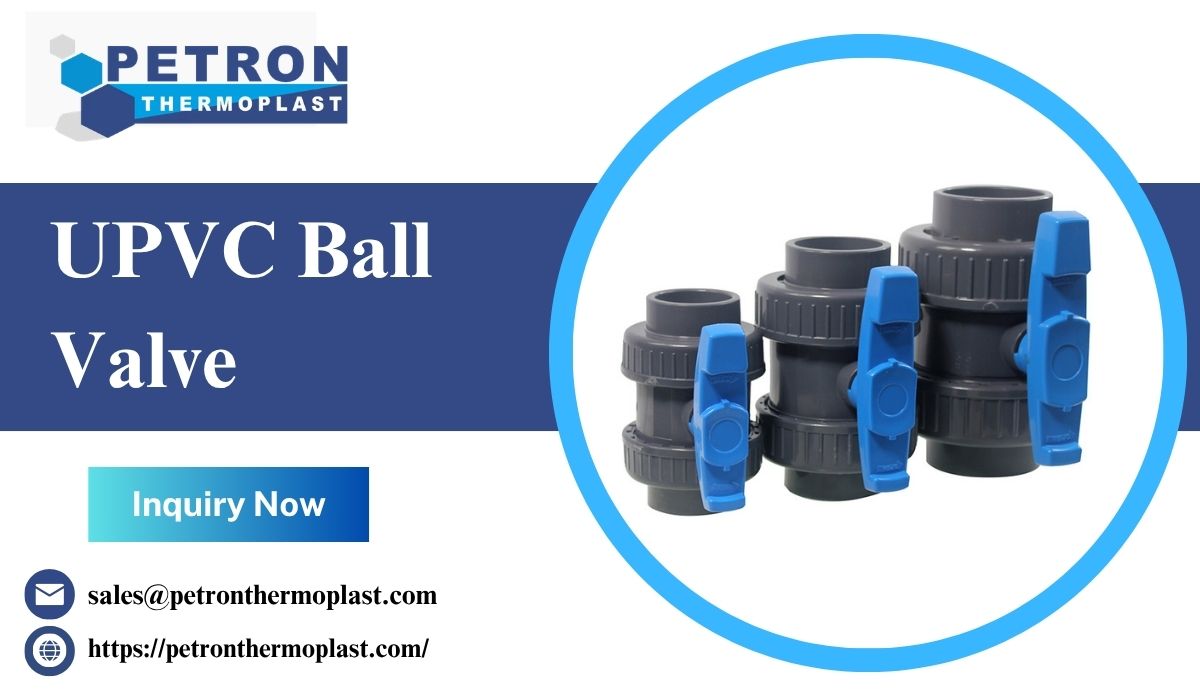
A UPVC Ball Valve with Reliable Shut-Off Performance is an important flow control component used in industrial piping systems for isolating and regulating the movement of water, chemicals, and other compatible fluids. Manufactured from unplasticized polyvinyl chloride (UPVC), these valves offer a practical combination of corrosion resistance, low maintenance, lightweight construction, and dependable operation. They are widely used in chemical processing, water treatment, wastewater management, electroplating, agriculture, and industrial fluid handling systems.
Unlike conventional metal valves, UPVC ball valves are designed to withstand many corrosive environments without the same risk of rust and surface degradation associated with metallic materials. The valve uses a spherical ball with a precision-machined passageway that rotates inside the valve body. When the bore is aligned with the pipeline, fluid can pass through the valve. When the ball is rotated by 90 degrees, the passage closes, providing positive shut-off.
For industries where reliable isolation is essential, selecting the correct valve material, pressure rating, connection type, and sealing arrangement is critical. A properly engineered UPVC Ball Valve can provide consistent shut-off performance while helping reduce maintenance requirements throughout the operating life of the piping system.
What Is a UPVC Ball Valve?
A UPVC Ball Valve is a quarter-turn valve designed to control or isolate fluid flow in a piping network. UPVC is a rigid thermoplastic material known for its resistance to corrosion and many chemicals. The valve typically consists of a UPVC body, ball, stem, seats, seals, and operating handle.
The internal ball contains a central bore. Turning the handle rotates the ball within the valve body:
- Handle parallel to the pipeline: Valve is generally open.
- Handle perpendicular to the pipeline: Valve is generally closed.
- Quarter-turn operation: Allows rapid opening and closing.
- Closed position: The ball and sealing seats create a shut-off barrier.
Reliable Shut-Off Performance
One of the main reasons industries select UPVC ball valves is their ability to provide reliable shut-off performance. The spherical ball rotates smoothly against specially designed valve seats, allowing the valve to move between open and closed positions with minimal operating effort.
When correctly selected and installed, the valve provides effective isolation of the process line. This is particularly useful during:
- Equipment maintenance
- Pipeline inspection
- Pump servicing
- Tank cleaning
- Chemical transfer operations
- System isolation
- Emergency shut-off procedures
Corrosion Resistance for Industrial Applications
Corrosion can significantly affect the service life of conventional metallic valves, particularly when exposed to aggressive chemicals, moisture, acids, alkalis, or saline environments. UPVC provides an alternative for many compatible applications where corrosion resistance is a major requirement.
A UPVC Ball Valve is commonly considered for handling compatible fluids in industries such as:
- Chemical processing
- Water treatment
- Wastewater treatment
- Effluent treatment plants
- Electroplating
- Pharmaceutical utilities
- Textile processing
- Agricultural irrigation
- Swimming pool water systems
- Industrial utility lines
Lightweight Construction and Easy Installation
UPVC ball valves are considerably lighter than many comparable metal valves. This lightweight construction can simplify transportation, handling, and installation, especially in large industrial piping networks.
Lower weight can also reduce the mechanical load placed on piping supports and connected equipment. During installation, the valve can generally be handled more easily by maintenance and piping teams.
Depending on the design, UPVC ball valves can be supplied with different end connection configurations, including socket or threaded connections. Industrial projects may also require specific connection standards based on the existing pipeline system.
Correct installation is essential for achieving reliable shut-off performance. The valve should be properly aligned with the pipeline, and excessive mechanical stress should be avoided during connection and tightening.
Low Maintenance Requirements
A well-designed UPVC Ball Valve can provide low-maintenance operation when used within its specified service conditions. The simple quarter-turn mechanism has fewer moving components than many complex flow control valves.
Routine maintenance may include:
- Inspecting the valve body and connections.
- Checking for signs of leakage.
- Confirming smooth handle operation.
- Inspecting seals where applicable.
- Checking for external damage.
- Verifying that the valve is operating within its specified pressure and temperature limits.
Applications of UPVC Ball Valve
The versatility of UPVC makes ball valves suitable for numerous fluid handling applications. However, the valve should always be selected according to the actual operating conditions.
- Chemical Processing
UPVC ball valves can be used for handling compatible chemical solutions and process fluids. Their corrosion-resistant properties make them suitable for certain chemical transfer and distribution systems.
- Water Treatment
Water treatment plants use valves throughout their piping systems to isolate pumps, filters, tanks, dosing systems, and process lines. UPVC ball valves can provide convenient on-off isolation for compatible water treatment applications.
- Wastewater and Effluent Treatment
Wastewater systems often require corrosion-resistant piping components. UPVC ball valves may be used in selected wastewater and effluent handling lines where the process medium is compatible with the valve materials.
- Chemical Storage Systems
Chemical storage tanks require reliable valves for controlled transfer and isolation. UPVC ball valves can be integrated into compatible tank outlet and transfer piping systems.
- Industrial Utility Lines
UPVC ball valves are also used in various utility applications involving water and other compatible fluids. Their lightweight construction can simplify installation in industrial piping networks.
Key Features of UPVC Ball Valve
A quality UPVC Ball Valve with Reliable Shut-Off Performance may offer the following features:
- UPVC thermoplastic valve body
- Corrosion-resistant construction
- Quarter-turn operation
- Compact design
- Lightweight construction
- Low operating torque
- Reliable on-off isolation
- Smooth internal flow passage
- Reduced maintenance requirements
- Availability with different connection options
- Suitable for selected chemical and water applications
- Easy visual identification of valve position
- Customizable according to project requirements
Selecting the Right UPVC Ball Valve
Choosing the correct UPVC ball valve requires more than selecting the valve size. Engineers and procurement teams should review several technical parameters before placing an order.
Valve Size
The nominal valve size should match the piping system and required flow capacity. Oversized or undersized valves can affect system performance.
Pressure Rating
The pressure rating must be suitable for the maximum operating pressure of the system. Pressure capability can vary according to valve design, size, temperature, and manufacturer specifications.
Temperature
UPVC has defined operating temperature limitations. The valve should not be exposed to temperatures beyond the manufacturer’s recommended range.
Chemical Compatibility
The process fluid must be compatible with UPVC as well as the valve’s seals and other wetted components. Chemical concentration and operating temperature should also be considered.
Connection Type
The valve connection should match the existing piping configuration. Common options may include socket and threaded connections, depending on the design.
Sealing Materials
Valve seats and O-rings should be selected according to the fluid, temperature, and operating conditions. The correct sealing material is essential for minimizing leakage and maintaining reliable operation.
Installation and Operating Considerations
Correct installation contributes significantly to long-term valve performance. Before installation, the pipeline should be cleaned to remove dirt, debris, and foreign particles that could interfere with valve operation.
The valve should be installed in the correct flow system orientation as recommended by the manufacturer. Pipe alignment should be checked to prevent unnecessary stress on the valve body.
During operation, the handle should be turned smoothly without excessive force. The valve should primarily be used for isolation unless the manufacturer specifically approves throttling service. Continuous throttling can cause undesirable flow conditions and may reduce the service life of the valve.
For systems carrying hazardous or corrosive chemicals, appropriate safety procedures must be followed during installation, operation, inspection, and maintenance.
Why Choose a High-Quality UPVC Ball Valve?
Industrial piping systems depend on reliable components to maintain safe and efficient operations. A high-quality UPVC ball valve can provide a practical solution for applications where corrosion resistance, easy operation, and reliable isolation are required.
The combination of thermoplastic construction, quarter-turn operation, and effective sealing makes the valve suitable for many industrial fluid handling systems. When properly specified and installed, it can help minimize unplanned maintenance and provide dependable shut-off performance.
For demanding industrial projects, buyers should consider working with an experienced manufacturer capable of supplying valves according to required sizes, connection standards, materials, and application conditions. Technical documentation, product specifications, chemical compatibility information, and pressure-temperature ratings should be reviewed before final selection.
UPVC Ball Valve for Industrial Flow Control
A UPVC Ball Valve with Reliable Shut-Off Performance is a practical choice for industrial piping systems requiring dependable on-off flow isolation. Its corrosion-resistant thermoplastic construction, lightweight design, quarter-turn operation, and low-maintenance characteristics make it suitable for a wide range of compatible applications.
From chemical processing and water treatment to wastewater management and industrial utility systems, UPVC ball valves can provide efficient flow isolation when correctly selected for the application. The key to achieving long-term performance is proper valve sizing, chemical compatibility assessment, pressure and temperature verification, correct installation, and regular inspection.
For industrial buyers looking for reliable flow control components, Petron Thermoplast can provide UPVC valve solutions designed for various industrial piping and fluid handling requirements. The right UPVC ball valve can contribute to dependable process isolation, reduced maintenance demands, and efficient operation across a wide range of industrial systems.