

Few dress codes create more uncertainty than cocktail attire. It sits in the middle ground between casual and formal, which means there is genuine room for interpretation — and genuine risk of either underdressing or overdressing. Understanding what cocktail attire means, what makes a cocktail dress work for different occasions, and how to build a complete look from shoes to accessories is the foundation of dressing well for semi-formal events with confidence.
What Is a Cocktail Dress?
A cocktail dress is a semi-formal dress typically hemmed between the knee and mid-thigh, designed for events that fall between casual and black-tie. The term comes from the mid-twentieth century cocktail hour — that transitional period between the working day and a formal dinner — and the dresses originally designed for it balanced elegance with practicality. Today, cocktail attire for women encompasses a broader range of silhouettes, fabrics, and hemlines than the original definition implies, but the core concept holds: polished, dressy, and appropriate for seated dinners, evening events, and semi-formal celebrations.
Cocktail Dress Outfit Ideas by Occasion
The specific cocktail dress outfit ideas that work best depend heavily on the event context. Cocktail dresses for weddings require more careful consideration than those for office parties or birthday celebrations — colour choices matter, and anything that could compete with the bride should be avoided. Classic choices for wedding guests include dusty rose, sage green, navy, burgundy, and champagne, with white, ivory, and very pale blush avoided out of consideration for the bride.
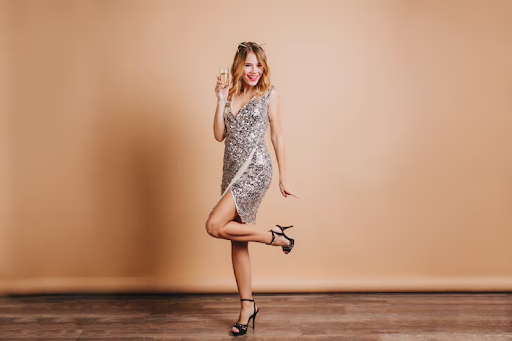
Cocktail dresses for evening parties allow more expressive choices. Deep jewel tones — emerald, sapphire, ruby — read as glamorous and evening-appropriate. Metallic fabrics in gold, silver, and bronze are well-suited to holiday and New Year’s events. A classic black cocktail dress outfit is perennially appropriate for almost every semi-formal occasion — its versatility makes it the most reliable wardrobe investment in this category.
Fall cocktail dresses benefit from rich seasonal tones and heavier fabrications. Velvet midi dresses in burgundy, forest green, or plum read as both seasonally appropriate and inherently luxurious. Structured crepe in jewel tones offers a more architectural, contemporary option for autumn events.
What to Wear: Building the Complete Look
A cocktail dress alone is the starting point, not the finished look. Cocktail dress shoes and accessories significantly influence how the outfit reads overall. For formal cocktail events, a pointed-toe heel — whether stiletto, block, or kitten — is the most conventional pairing and adds length to the leg. Strappy sandal heels work well for warmer weather events. For women who prefer flats, elegant pointed or square-toe ballet flats in metallic or neutral tones maintain the dress’s formality level.
How to accessorize a cocktail dress depends on the dress itself. A heavily embellished or printed dress needs minimal jewellery — stud earrings or a simple bracelet allows the dress to remain the focal point. A solid, understated dress can carry more statement accessories — chandelier earrings, a layered necklace, or a structured clutch in a contrasting tone. The general principle is balance: let one element of the look be the statement and allow everything else to support rather than compete.
Handbags for cocktail occasions are typically small — clutches, box bags, or minaudières. Their function is aesthetic as much as practical; the goal is to carry essentials without a bag that dominates the silhouette. Neutral metallics, black satin, and tonal options all work reliably.
Cocktail Dresses for Women Over 40
Cocktail dresses for women over 40 work best when they balance sophistication with personal comfort and confidence. Midi hemlines — hitting at or just below the knee — offer coverage and elegance without sacrificing style. Three-quarter sleeves or structured cap sleeves provide arm coverage while maintaining the dress’s contemporary line. Wrap styles and A-line silhouettes are consistently flattering and widely available in cocktail-appropriate fabrications.
Fit is more important than trend alignment. A well-fitted dress in a classic silhouette reads as more polished and sophisticated than a trendy but poorly fitted alternative. Prioritising tailoring ensures the dress looks intentional rather than accidental.
The Semi-Formal Dress Code for Women
When an invitation specifies semi-formal dresses for women, cocktail length is the default interpretation — typically knee to mid-calf, in elevated fabrics and refined silhouettes. Jumpsuits and tailored wide-leg trouser suits in dressy fabrics are increasingly accepted as semi-formal alternatives for women who prefer a non-dress option. The key distinction from casual dress is fabric and finish: crepe, lace, chiffon, silk, and velvet all read as semi-formal; cotton, denim, jersey, and linen typically do not.
Conclusion
The cocktail dress remains one of the most versatile and reliable options in a woman’s wardrobe precisely because it occupies that useful middle ground between casual and formal. Building a thoughtful outfit around a well-chosen cocktail dress — with appropriate shoes, scaled accessories, and attention to the specific event’s context — creates a look that is polished, appropriate, and genuinely personal.