

New industrial projects require carefully planned piping systems to ensure reliable fluid transfer, efficient process operations, and long-term system performance. From chemical processing plants and water treatment facilities to manufacturing units and industrial infrastructure, piping networks connect tanks, pumps, valves, filtration equipment, and process machinery. Selecting the right materials and components at the initial project stage can significantly influence installation efficiency and system reliability.
For compatible industrial applications, UPVC Pipe and Fittings offer a practical thermoplastic solution for fluid handling and process piping. UPVC, or Unplasticized Polyvinyl Chloride, is widely used in applications where corrosion resistance, lightweight construction, and chemical compatibility are important considerations.
If you are planning a new industrial facility, choosing a reliable supplier to buy UPVC Pipe and Fittings for new industrial projects can simplify procurement and help ensure that the required piping components are available according to project specifications. Petron Thermoplast manufactures and supplies industrial thermoplastic piping products for applications including chemical processing, water treatment, industrial fluid handling, and process piping.
What Are UPVC Pipes and Fittings?
UPVC pipes are rigid thermoplastic pipes designed to transport compatible fluids through industrial and commercial piping systems. UPVC fittings are used to connect pipes and create the required pipeline configuration.
The fittings allow the piping system to change direction, branch into multiple lines, reduce pipe diameter, or connect with equipment and other piping components.
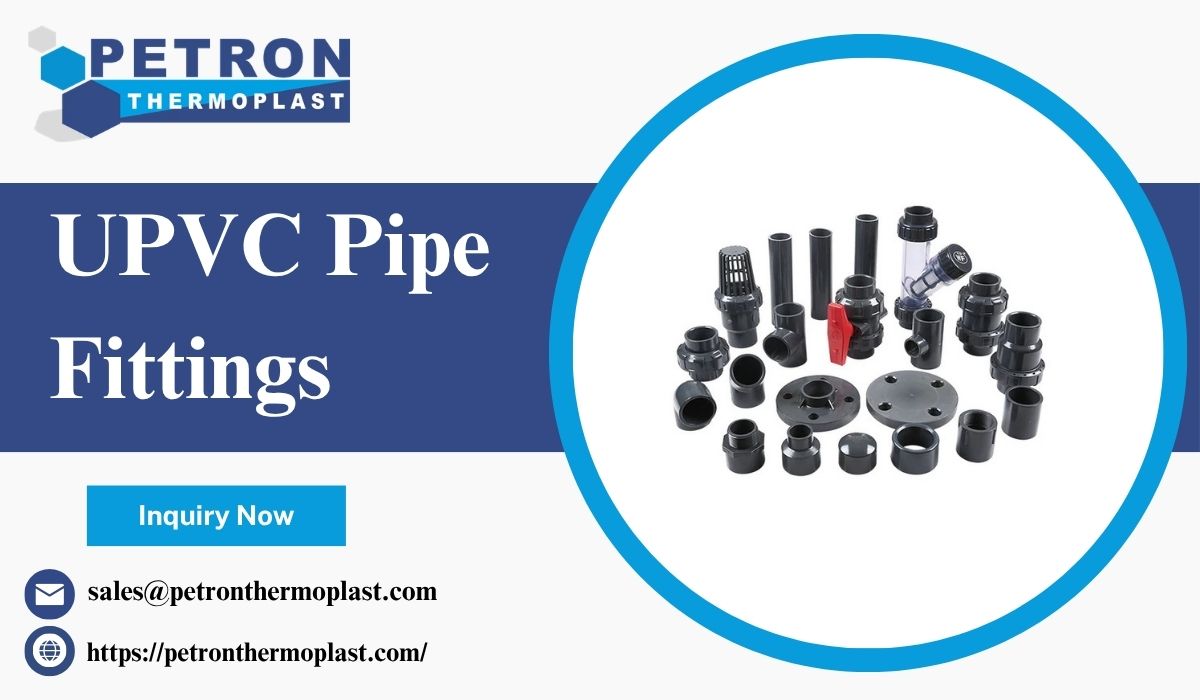
Common UPVC pipe fittings include:
- UPVC Elbows
- UPVC Tees
- UPVC Reducers
- UPVC Couplings
- UPVC Unions
- UPVC Flanges
- UPVC Adapters
- UPVC Bushes
- UPVC Nipples
- UPVC End Caps
- UPVC Cross Fittings
- UPVC Threaded Fittings
Why Choose UPVC Pipe and Fittings for New Industrial Projects?
Material selection is one of the most important decisions during the engineering stage of a new industrial project. The selected piping material must be compatible with the process fluid and suitable for the expected operating environment.
UPVC can offer several advantages for compatible industrial applications.
Corrosion Resistance
UPVC is a non-metallic material and does not experience conventional metallic corrosion. This characteristic makes it suitable for selected applications where exposure to moisture or compatible corrosive fluids may affect metallic piping.
For chemical applications, the compatibility of UPVC should be verified for the specific chemical, concentration, temperature, and operating conditions.
Lightweight Construction
UPVC pipes and fittings are generally lightweight compared with many metallic piping alternatives. This can make transportation, handling, and installation easier during industrial project construction.
Lower component weight may also simplify certain support and installation requirements, subject to engineering design.
Chemical Resistance
UPVC can provide resistance to many compatible chemicals. As a result, it can be considered for selected chemical handling, water treatment, and industrial process applications.
However, no single material is suitable for every chemical. A compatibility assessment should be performed before selecting UPVC for a specific process.
Low Maintenance Requirements
In suitable applications, UPVC piping systems can require relatively low maintenance because they are not affected by metallic rust and corrosion.
Proper installation, correct material selection, and regular inspection remain essential for maintaining system performance.
UPVC Pipe and Fittings for Chemical Processing Applications
Chemical processing plants often require piping systems capable of handling compatible chemicals and process fluids.
UPVC Pipe and Fittings can be considered for applications such as:
- Chemical transfer
- Water treatment
- Chemical dosing
- Process fluid distribution
- Industrial utility systems
- Chemical storage connections
- Wastewater treatment
Benefits of Buying UPVC Pipe and Fittings from a Manufacturer
For new industrial projects, purchasing directly from a manufacturer can offer practical procurement advantages.
Product Coordination
A manufacturer can supply multiple pipe and fitting configurations required for the project.
Bulk Project Supply
Large industrial installations often require substantial quantities of pipes and fittings. Manufacturer-direct procurement can support bulk requirements.
Technical Product Selection
Project teams can discuss technical requirements and application conditions before finalizing product selection.
Consistent Material Selection
Sourcing compatible components from one supply channel can help maintain consistency across the piping system.
Project-Based Procurement
New plant installations often follow a detailed procurement schedule. Coordinated supply can help align material availability with project timelines.
Important Factors When Buying UPVC Pipe and Fittings
Before purchasing UPVC Pipe and Fittings for a new industrial project, consider the following factors.
- Pipe Size
Determine the required nominal pipe size based on the system design and flow requirements.
- Operating Pressure
The pressure conditions should be evaluated to ensure that the selected piping components are appropriate for the application.
- Operating Temperature
UPVC performance depends on temperature. The expected operating temperature should be considered during material selection and system design.
- Chemical Compatibility
Confirm that UPVC is compatible with the process fluid, concentration, and operating conditions.
- Connection Method
Identify the required connection configuration and ensure compatibility between pipes, fittings, valves, and equipment.
- Flow Requirements
Pipe diameter and fitting configuration should be selected according to the required flow rate and pressure-loss considerations.
- Installation Environment
The installation location, exposure conditions, support requirements, and accessibility should be evaluated.
- Quantity Planning
Prepare a detailed bill of materials to determine the required quantity of each pipe and fitting type.
UPVC Pipe and Fittings for EPC Projects
EPC contractors working on new industrial facilities often require a complete range of piping components according to approved engineering specifications.
UPVC Pipe and Fittings may be required for:
- Chemical plants
- Water treatment facilities
- Manufacturing units
- Industrial processing plants
- Utility systems
- Infrastructure projects
- Wastewater treatment facilities
For EPC procurement, the manufacturer may require project information including:
- Pipe sizes
- Fitting types
- Quantities
- Connection details
- Chemical media
- Operating pressure
- Operating temperature
- Technical specifications
- Delivery requirements
UPVC Pipe and Fittings for Plant Expansion
UPVC piping products can also be considered for plant expansion and process upgrade projects where the existing piping system is technically compatible.
Expansion projects may require:
- New branch lines
- Additional process pipelines
- Equipment connections
- Pipeline extensions
- Replacement fittings
- New utility lines
Bulk Supply of UPVC Pipe and Fittings
New industrial projects often require large quantities of piping components. Bulk supply can be particularly useful for EPC contractors, plant owners, OEMs, and industrial procurement teams.
Bulk orders may include:
- UPVC Pipes
- Elbows
- Tees
- Reducers
- Couplings
- Unions
- Flanges
- Adapters
- Bushes
- Other project-specific components
Quality Considerations for Industrial UPVC Piping
Quality should be evaluated carefully before purchasing UPVC Pipe and Fittings for a new industrial project.
Important considerations include:
- Material quality
- Dimensional accuracy
- Fitting configuration
- Surface finish
- Connection compatibility
- Product consistency
- Packaging
- Storage conditions
- Applicable technical requirements
Why Choose Petron Thermoplast for UPVC Pipe and Fittings?
Petron Thermoplast manufactures and supplies industrial thermoplastic piping solutions for applications across chemical processing, water treatment, and process industries.
Our UPVC Pipe and Fittings can support requirements for:
- New industrial projects
- Chemical processing plants
- Water treatment facilities
- Industrial manufacturing
- Process piping systems
- Plant expansion projects
- EPC projects
- OEM applications
- Bulk industrial procurement
Key Advantages
- Industrial UPVC Pipe and Fittings
- Multiple fitting configurations
- Project-based supply
- Bulk order support
- EPC and OEM requirements
- Chemical industry applications
- New plant installation support
- Plant expansion requirements
- Manufacturer-direct procurement
- Industrial and export-oriented supply
Conclusion
Buy UPVC Pipe and Fittings for New Industrial Projects when your application requires a suitable thermoplastic piping solution with corrosion resistance, lightweight construction, and compatibility with selected industrial fluids. UPVC can be considered for various applications across chemical processing, water treatment, industrial manufacturing, and process piping, subject to proper technical evaluation.
For new plant installations, selecting the correct pipes and fittings is essential for developing an efficient and reliable piping network. Project teams should evaluate pipe size, pressure, temperature, chemical compatibility, flow requirements, connection methods, and installation conditions before procurement.
UPVC Pipe and Fittings can be used to connect tanks, pumps, valves, filters, process equipment, and other components in suitable industrial systems. Bulk supply is also available for large-scale projects, EPC contracts, OEM requirements, and plant expansion applications.
Petron Thermoplast provides industrial UPVC Pipe and Fittings for new plant installations and project-based procurement. By working with an experienced manufacturer and clearly defining technical requirements, industrial buyers can streamline procurement and select suitable piping components for their specific application.
For every new industrial project, the right piping material should be selected based on engineering calculations, process conditions, and chemical compatibility. When UPVC is technically suitable, a properly designed UPVC piping system can provide a practical solution for reliable fluid handling and industrial process applications.