

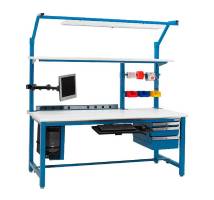
When you step into your laboratory each day, your productivity depends on more than your expertise or equipment. The physical layout of your space—especially your lab workbench—directly shapes how efficiently you perform experiments, manage materials, and maintain safety standards. If your workbench design is poorly planned, you lose time, increase contamination risks, and create unnecessary stress. But when it’s thoughtfully engineered, you streamline workflows, protect sensitive processes, and improve overall lab performance.
How Lab Workbench Design Influences Your Daily Workflow
Your lab workbench is not just a surface. It is the central command station for your operations. Whether you work in research, pharmaceuticals, electronics, or cleanroom environments, the design determines how easily you can move, access tools, and maintain order.
If your workbench lacks adequate space, you constantly rearrange materials. If storage is poorly positioned, you waste time searching for essential items. If surfaces are not compatible with chemicals or sterile requirements, you risk contamination and damage.
A well-designed Lab Workbench allows you to:
- Maintain logical workflow sequencing
- Minimize unnecessary movement
- Improve material handling efficiency
- Support ergonomic posture
- Reduce cross-contamination risks
By optimizing design, you remove bottlenecks and focus on precision instead of logistics.
For example, choosing a durable and cleanroom-compatible stainless steel cleanroom lab workbench with integrated storage solutions ensures both durability and contamination control while enhancing workflow efficiency.
Ergonomics: Protecting Your Productivity and Health
You may not immediately notice how poor ergonomics affect your efficiency, but over time, strain and fatigue reduce performance. If your bench height is incorrect, you lean forward excessively or strain your shoulders. This leads to discomfort, slower execution, and potential long-term injury.
A properly designed lab workbench considers:
- Adjustable height options
- Adequate legroom
- Easy-to-reach shelving
- Proper lighting integration
- Anti-fatigue compatibility
When you are physically comfortable, you maintain better focus and precision. Ergonomic design directly impacts accuracy in measurements, delicate handling, and repetitive procedures.
Storage Integration Improves Organization
Clutter is the enemy of efficiency. When tools, instruments, and materials lack designated storage, your workspace becomes chaotic. This increases the risk of errors and contamination.
Smart lab workbench designs include:
- Under-bench cabinets
- Modular shelving
- Drawer systems
- Chemical-resistant compartments
- Pass-through access for cleanrooms
Integrated storage allows you to maintain a structured workflow. You can separate frequently used tools from rarely used equipment and keep hazardous materials safely contained.
If you’re designing or upgrading your laboratory infrastructure, working with an experienced manufacturer like CleaTech LLC cleanroom laboratory equipment manufacturer ensures your workbench aligns with industry standards and operational needs.
Material Selection Affects Durability and Cleanliness
The surface material of your workbench plays a critical role in lab efficiency. In environments involving chemicals, moisture, or sterile processes, inferior materials degrade quickly and compromise safety.
Stainless steel remains one of the most reliable materials for laboratory workbenches because it offers:
- Chemical resistance
- Easy sanitization
- Corrosion resistance
- Long-term structural integrity
- Compatibility with cleanroom standards
When your bench surface withstands harsh conditions, you avoid frequent repairs or replacements. That stability directly supports uninterrupted workflow.
Customization Supports Specialized Applications
No two laboratories operate identically. A generic bench design may not meet your specific needs. Customization ensures your workbench supports your exact process.
You might require:
- ESD protection for electronics
- Laminar airflow compatibility
- Integrated sinks or utilities
- Heavy load capacity
- Mobility with locking casters
Tailoring the design prevents workflow inefficiencies that arise from adapting your process to unsuitable furniture. Instead, your workbench supports your procedures seamlessly.
Safety Design Minimizes Operational Risks
Efficiency is not just about speed. It is also about minimizing errors and hazards. Poor workbench design can create:
- Chemical spill risks
- Electrical hazards
- Cross-contamination
- Inadequate ventilation
- Improper waste management
A well-designed lab workbench includes spill containment features, rounded edges, stable support, and compatibility with ventilation systems. When safety is integrated into the structure, you reduce downtime caused by accidents or compliance violations.
Cleanroom Compatibility Enhances Precision
If you operate in controlled environments, your workbench must meet strict contamination control requirements. Smooth, non-porous surfaces and sealed joints prevent particle accumulation.
Design elements such as:
- Welded stainless steel frames
- Minimal crevices
- Easy-clean surfaces
- Non-shedding materials
Ensure your lab meets regulatory standards and maintains process integrity.
Long-Term Cost Efficiency
While investing in high-quality workbench design may seem costly initially, it significantly reduces long-term expenses. Poorly designed benches require frequent repairs, replacements, and workflow adjustments.
When you invest in a high-performance workbench, you benefit from:
- Reduced maintenance costs
- Lower contamination incidents
- Improved employee productivity
- Enhanced operational lifespan
Efficiency gains compound over time, delivering measurable returns on investment.
Designing for Future Expansion
Your laboratory may evolve as projects expand or technologies advance. A modular lab workbench system allows you to adapt without replacing entire setups.
Consider flexible configurations that allow:
- Add-on shelving
- Reconfigurable layouts
- Utility integration upgrades
- Mobility between zones
Future-ready design protects your investment and supports scalable growth.
Frequently Asked Questions
Why does lab workbench height matter?
Workbench height affects posture and comfort. Proper height reduces strain on your back, shoulders, and wrists, improving productivity and minimizing fatigue.
What material is best for a laboratory workbench?
Stainless steel is highly recommended due to its chemical resistance, durability, and ease of cleaning, especially in cleanroom environments.
How does workbench design affect lab safety?
Good design includes spill containment, stable support, and compatibility with ventilation systems. These features reduce hazards and improve compliance.
Can lab workbenches be customized?
Yes. Workbenches can be customized with storage options, utility integration, mobility features, and specialized surfaces to match specific applications.
How do I choose the right lab workbench for my facility?
Evaluate your workflow, materials handled, space constraints, and regulatory requirements. Then consult a professional manufacturer to design a solution tailored to your needs.
Conclusion
Your lab workbench is more than furniture—it is a strategic tool that shapes how effectively you operate. When you invest in intelligent design, you optimize workflow, enhance safety, and future-proof your laboratory. If you are ready to upgrade your laboratory infrastructure, explore tailored solutions and contact us today for custom lab workbench design consultation to improve your lab efficiency.