

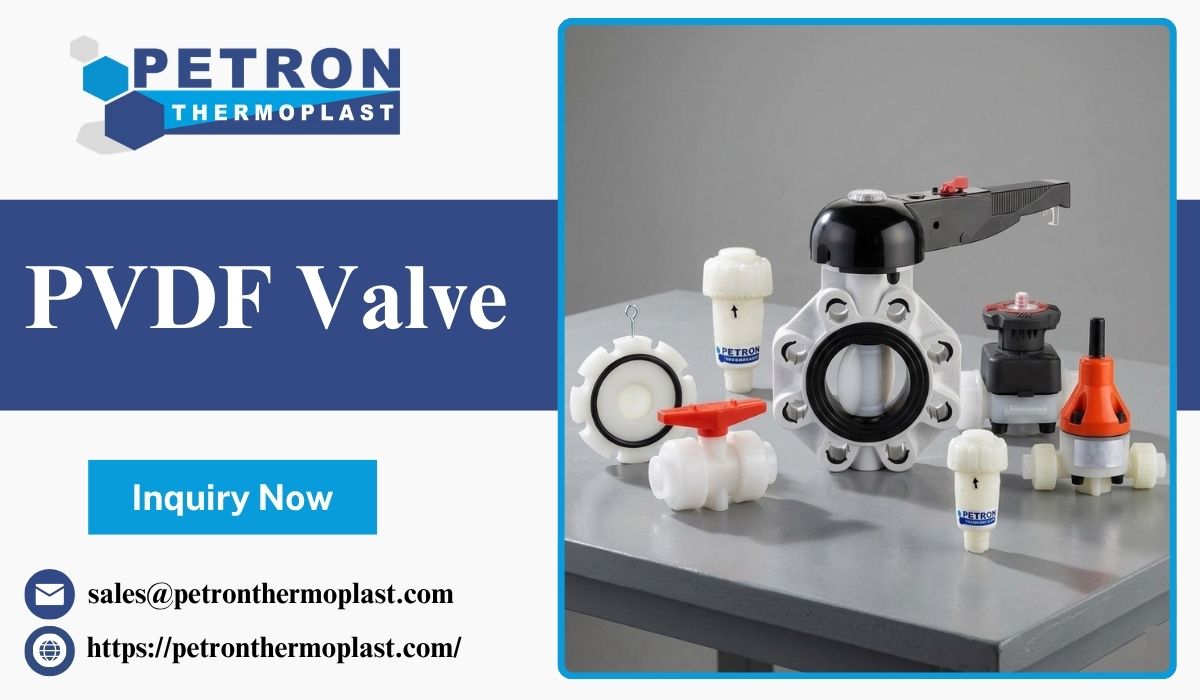
Industrial process control systems require precise regulation of fluid flow, pressure, and chemical compatibility to ensure operational efficiency and safety. Polyvinylidene fluoride (PVDF) valves are high-performance thermoplastic components specifically engineered to meet these demanding requirements. With exceptional chemical resistance, thermal stability, and mechanical strength, industrial PVDF valves play a critical role in advanced process control systems across chemical, pharmaceutical, semiconductor, and water treatment industries.
Overview of PVDF Material
PVDF is a semi-crystalline fluoropolymer known for its superior resistance to aggressive chemicals and high temperatures. It is widely used in environments where conventional materials fail due to corrosion or thermal degradation.
Key Material Properties
- Density: 1.75 – 1.78 g/cm³
- Tensile Strength: 40 – 55 MPa
- Operating Temperature Range: -40°C to +140°C
- Melting Point: ~170°C
- Excellent resistance to acids, halogens, and oxidizing agents
- Low permeability and high purity
These properties make PVDF an ideal material for manufacturing valves used in critical industrial processes.
Role of PVDF Valves in Process Control Systems
Process control systems rely on valves to regulate flow, isolate sections, and maintain system stability. PVDF valves provide precise control while maintaining resistance to harsh chemical and thermal conditions.
Core Functions
- Flow regulation and throttling
- Isolation of process lines
- Pressure control
- Prevention of backflow (in specific valve types)
PVDF valves ensure consistent performance in automated and manual systems.
Types of Industrial PVDF Valves
Ball Valves
- Quarter-turn operation
- Fast opening and closing
- Low pressure drop
- Suitable for on/off applications
Diaphragm Valves
- Ideal for high-purity applications
- Excellent sealing performance
- Suitable for corrosive and sensitive fluids
Butterfly Valves
- Compact design for large pipelines
- Efficient flow control
- Lightweight construction
Check Valves
- Prevent backflow
- Protect pumps and equipment
Each valve type is designed to meet specific process control requirements.
Key Features of PVDF Valves
Chemical Resistance
PVDF valves are resistant to:
- Strong acids (sulfuric, nitric, hydrochloric)
- Halogens and oxidizing agents
- Organic solvents
This ensures safe operation in aggressive chemical environments.
Thermal Stability
- Continuous operation up to 140°C
- Resistance to thermal cycling
- Maintains mechanical properties under heat
High Purity
- Low extractables and leachables
- Suitable for pharmaceutical and semiconductor industries
- Prevents contamination
Mechanical Strength
- High tensile strength
- Resistance to impact and stress
- Long service life
Leak-Proof Sealing
- Precision-engineered seats (PTFE, EPDM)
- Tight shut-off performance
- Minimal leakage under pressure
Integration with Advanced Process Control Systems
Modern industrial systems often use automation and control technologies to optimize operations.
Automation Compatibility
- Electric actuators for precise control
- Pneumatic actuators for rapid response
- Integration with PLC and SCADA systems
Control Features
- Position indicators
- Flow modulation capability
- Remote monitoring and control
PVDF valves support seamless integration into automated systems, enhancing process efficiency.
Manufacturing Process
- Raw Material Selection
- High-purity PVDF resin
- Controlled additives for enhanced performance
- Injection Molding
- Precision molding for valve components
- Tight dimensional tolerances
- Machining and Assembly
- Accurate fitting of internal components
- Calibration for smooth operation
- Quality Testing
- Pressure testing
- Leak testing
- Chemical resistance validation
Industrial Applications
Chemical Processing Plants
Used for handling aggressive chemicals and maintaining precise flow control.
Pharmaceutical Industry
Ensures high purity and contamination-free fluid handling.
Semiconductor Industry
Used in ultra-pure chemical and water systems.
Water and Wastewater Treatment
Controls flow in chemical dosing and filtration systems.
Oil and Gas Industry
Suitable for corrosive fluid handling and process control.
Advantages Over Metal Valves
| Parameter | PVDF Valve | Metal Valve |
| Corrosion Resistance | Excellent | Limited (requires coating) |
| Weight | Lightweight | Heavy |
| Maintenance | Low | Higher |
| Chemical Compatibility | Superior | Limited |
| Service Life | Long | Moderate |
Installation Guidelines
- Ensure proper alignment with pipeline
- Use compatible fittings and connections
- Avoid excessive mechanical stress
- Follow recommended torque specifications
Proper installation ensures reliable operation and longevity.
Maintenance and Serviceability
PVDF valves require minimal maintenance due to their corrosion resistance.
Maintenance Practices
- Periodic inspection of seals and seats
- Cleaning to remove deposits
- Checking actuator performance
Service Benefits
- Easy disassembly
- Replaceable components
- Reduced downtime
Quality Standards and Compliance
High-quality PVDF valves comply with international standards:
- ISO 9001: Quality Management System
- ASTM standards for PVDF materials
- DIN and EN standards for valve design
Customization Options
Manufacturers provide customized solutions for specific industrial requirements:
- Size and pressure rating customization
- Specialized sealing materials
- Automated or manual operation options
- Integration with process control systems
Lifecycle Performance and Cost Efficiency
PVDF valves provide long-term economic benefits:
- Reduced maintenance costs
- Extended service life
- High reliability in continuous operations
- Lower total cost of ownership
Sustainability Considerations
- Recyclable thermoplastic material
- Reduced need for chemical coatings
- Long lifecycle reduces environmental impact
Conclusion
Industrial PVDF valves for advanced process control systems offer a reliable, high-performance solution for demanding industrial applications. With exceptional chemical resistance, thermal stability, and compatibility with automation systems, these valves ensure precise control and long-term durability.
Their ability to operate efficiently in aggressive environments, combined with low maintenance requirements and high purity standards, makes PVDF valves an essential component in modern industrial process systems.