

Introduction
The growing adoption of cloud computing, artificial intelligence, and business analytics has changed how organisations manage information. Businesses generate enormous amounts of data through customer transactions, enterprise applications, financial systems, websites, and digital platforms. Processing this information efficiently requires professionals who understand how to build, maintain, and optimise modern data infrastructure.
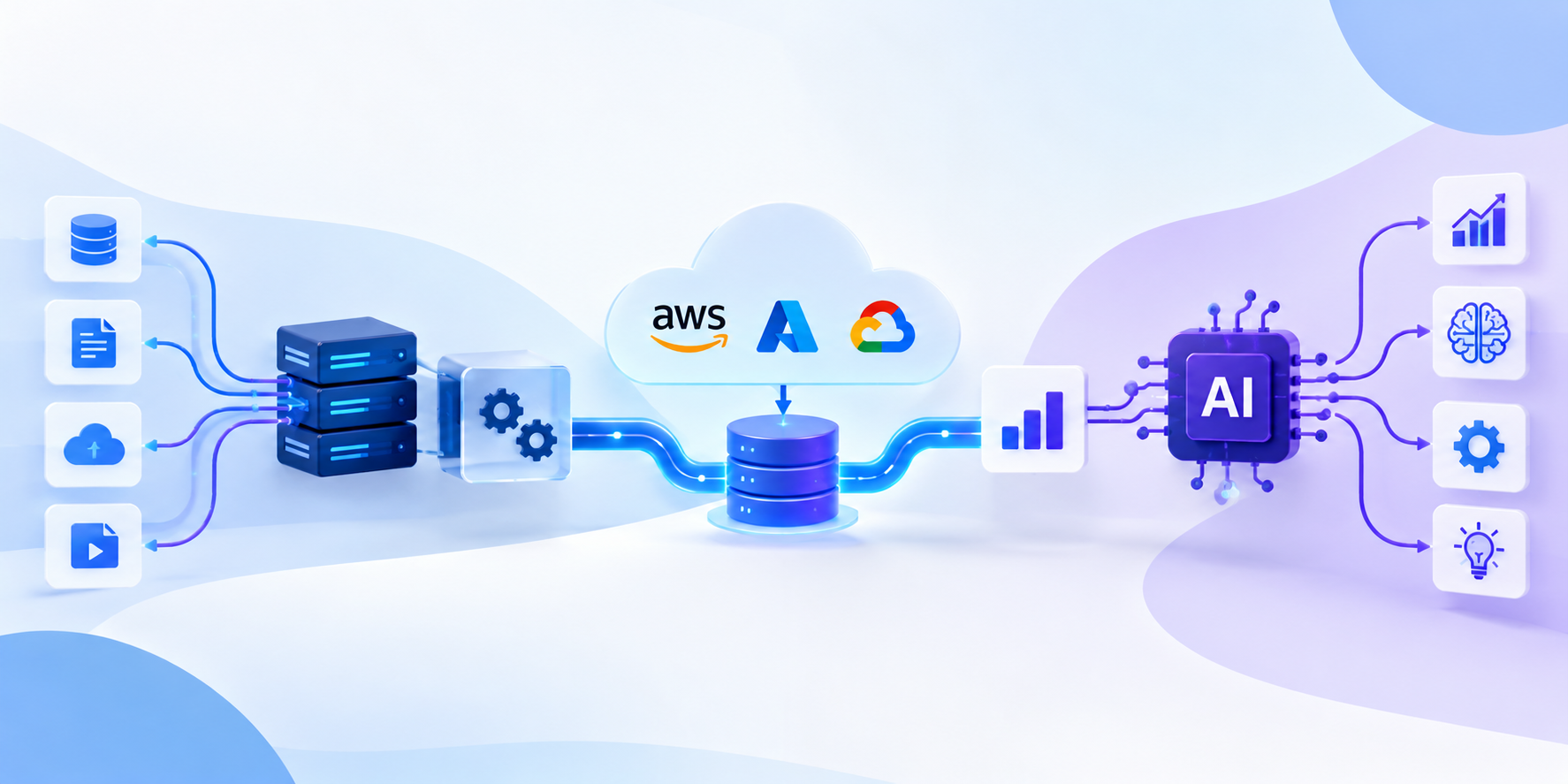
Data engineering plays an important role in this process. Data engineers develop automated pipelines, integrate information from different sources, manage databases, and prepare datasets for analytics and business intelligence. Their work ensures that organisations can access reliable information when making operational and strategic decisions.
As cloud-based technologies continue evolving, professionals with expertise in data engineering are finding opportunities across industries. Developing knowledge of programming, databases, data processing, and cloud platforms can help individuals prepare for these roles. Professional training and certification preparation can also provide a structured approach to understanding industry technologies.
Understanding the Role of a Data Engineer
A data engineer is responsible for designing and maintaining systems that collect, process, transform, and store information. These systems help organisations manage data generated by different applications and make it available for reporting, analytics, and machine learning.
For example, a banking organisation may collect information from loan applications, customer accounts, repayment records, and transaction platforms. Since this information comes from different sources, it needs to be integrated, cleaned, and organised before it can support business analysis.
Data engineers develop the pipelines that automate these activities. Their responsibilities include managing databases, implementing ETL processes, maintaining data warehouses, monitoring data quality, and improving pipeline performance.
The role requires knowledge of programming languages, database technologies, cloud infrastructure, and distributed processing. Professionals must also understand how different systems communicate and how to resolve issues that affect data accuracy or availability.
Essential Skills Required for a Data Engineering Career
Building expertise in data engineering requires a combination of technical and analytical skills.
SQL and Database Management: SQL is used to retrieve, filter, join, and transform information stored in relational databases. Understanding database design, indexing, query optimisation, and data modelling helps professionals manage complex datasets.
Python Programming: Python is widely used for data processing, automation, API integration, and pipeline development. Knowledge of functions, data structures, file handling, and libraries such as Pandas is beneficial.
ETL and Data Integration: Extract, Transform, and Load processes help organisations collect information from different sources, convert it into a consistent format, and store it in a destination system. Understanding incremental loading, error handling, and pipeline orchestration is important.
Big Data Technologies: Apache Spark and PySpark support distributed data processing, allowing professionals to work with large datasets across multiple computing resources.
Cloud Computing: Knowledge of cloud storage, computing, networking, security, and monitoring helps engineers build scalable data infrastructure using modern cloud platforms.
Building a Strong Foundation Through Structured Data Engineering Learning
Before specialising in a cloud platform, learners should understand the fundamentals of how information moves through an organisation. This includes database management, data modelling, programming, and the development of automated workflows.
A structured learning programme can help beginners understand these concepts progressively. Starting with Python and SQL, learners can gradually move towards ETL development, data warehousing, data lakes, and distributed processing.
Practical assignments are particularly important. For example, learners can develop a project that collects sales information from CSV files, removes duplicate records, handles missing values, and stores the processed information in a database.
Individuals interested in developing these foundational capabilities can consider a data engineer online course. Understanding the broader data engineering lifecycle provides a useful starting point for working with different technologies and enterprise data environments.
Microsoft Fabric and the Growing Importance of Professional Certifications
Microsoft Fabric is an integrated analytics platform that brings together data engineering, data warehousing, real-time intelligence, and business intelligence capabilities. It helps organisations manage different data workloads within a unified environment.
OneLake provides centralised data storage, while Lakehouse and Warehouse capabilities support different data architectures. Data Factory helps manage data integration and orchestration, and Spark environments support large-scale data processing.
For example, a retail organisation may collect information from online purchases, inventory systems, and customer applications. Microsoft Fabric can help integrate these datasets, transform records, and make the processed information available for business analytics.
Professionals working with this platform should understand SQL, PySpark, Kusto Query Language (KQL), data ingestion, transformation, orchestration, and performance monitoring.
The Microsoft Certified: Fabric Data Engineer Associate credential is associated with the DP-700 examination. It assesses the ability to implement and manage analytics solutions, ingest and transform information, and monitor and optimise data environments.
Learners interested in structured preparation for Microsoft technology credentials can explore microsoft certification courses to develop their understanding of Microsoft Fabric and its data engineering capabilities.
Understanding Azure Data Engineering and Enterprise Cloud Infrastructure
Microsoft Azure provides a broad collection of services for organisations that need to integrate, process, and manage information across enterprise systems. These services support data storage, pipeline development, distributed processing, and analytics.
Azure Data Factory is used for data integration and workflow orchestration, while Azure Data Lake Storage provides scalable storage for structured and unstructured information. Azure Databricks supports distributed processing through Apache Spark, and Azure Synapse Analytics offers enterprise data warehousing capabilities.
Consider a financial institution that collects information from customer applications, loan management systems, and transaction platforms. An Azure-based data pipeline can extract these records, standardise the information, remove inconsistencies, and prepare structured datasets for reporting.
Professionals working with Azure data technologies should understand data ingestion, transformation, storage management, pipeline monitoring, security, and performance optimisation.
Those interested in developing platform-specific knowledge can refer to the microsoft azure data engineer certification training pathway to study Azure data engineering concepts and services.
One certification detail is important: Microsoft’s former Azure Data Engineer Associate certification and DP-203 examination were retired on March 31, 2025. Therefore, learners should distinguish Azure technology training from preparation for an active Microsoft certification. Microsoft Fabric Data Engineer Associate (DP-700) is a separate current credential. <Cite refs={[“turn357507search0″,”turn357507search1”]}/>
Developing Cloud Data Pipelines with Amazon Web Services
Amazon Web Services offers a separate cloud ecosystem for organisations that require scalable infrastructure for data storage, processing, and analytics.
Amazon S3 provides object storage, AWS Glue supports data integration and ETL operations, and Amazon Redshift offers data warehousing capabilities. Amazon Athena enables SQL-based queries against data stored in data lakes, while Amazon Kinesis supports real-time streaming applications.
For example, an e-commerce company may receive thousands of customer orders throughout the day. Incoming transaction records can be stored in Amazon S3, processed using AWS Glue, and organised in Amazon Redshift for analytical reporting.
Professionals working with AWS should understand data ingestion, transformation, pipeline orchestration, data store management, security, and monitoring.
The AWS Certified Data Engineer – Associate credential, associated with the DEA-C01 examination, validates knowledge of data pipelines, data lifecycle management, data quality, and cloud data operations.
Individuals preparing to work with Amazon’s cloud infrastructure can consider an aws data engineer full course to develop knowledge of AWS services and understand how they are applied in practical data engineering environments.
Practical Projects That Help Develop Industry-Ready Skills
Practical implementation is essential for understanding how data engineering technologies work together. Projects allow learners to apply theoretical concepts, troubleshoot technical challenges, and demonstrate their capabilities.
A retail sales pipeline is a useful beginner project. It can involve extracting transaction records, removing duplicate entries, handling missing information, and loading processed datasets into a database.
Another project could involve developing an automated ETL workflow that retrieves information from an API, transforms the records using Python, and stores the results in cloud storage.
More advanced projects can include developing a cloud-based data warehouse, implementing incremental data loading, or creating a real-time streaming pipeline.
Each project should include documentation explaining the business problem, technologies used, data flow, challenges, and final outcome. A well-documented portfolio can help demonstrate practical knowledge during technical interviews.
Conclusion
Data engineering has become an important part of modern business infrastructure. Organisations need professionals who can develop reliable pipelines, manage cloud environments, and prepare information for analytics and business intelligence.
Building expertise requires a combination of programming, database management, data processing, and cloud platform knowledge. Understanding specialised technologies such as Microsoft Fabric, Azure, and AWS can help professionals develop capabilities relevant to different enterprise environments.
A structured learning approach, supported by practical projects and relevant certification preparation, can help aspiring professionals build the technical foundation required for a career in data engineering.
Frequently Asked Questions
1. What skills are required to become a data engineer?
Data engineers should understand SQL, Python, database management, ETL processes, data modelling, and cloud computing. Knowledge of Apache Spark, PySpark, data warehousing, and pipeline orchestration is also beneficial.
2. Which Microsoft certification is relevant for data engineers?
Microsoft Certified: Fabric Data Engineer Associate is a relevant certification for professionals working with Microsoft Fabric. The associated DP-700 examination covers data ingestion, transformation, analytics solution management, and performance optimisation.
3. What is the difference between Azure Data Engineering and Microsoft Fabric?
Azure Data Engineering involves working with services such as Azure Data Factory, Azure Data Lake Storage, Azure Databricks, and Azure Synapse Analytics. Microsoft Fabric provides an integrated analytics environment with capabilities such as OneLake, Lakehouse, Warehouse, and Data Factory.
4. What does the AWS Certified Data Engineer – Associate certification cover?
The AWS Certified Data Engineer – Associate certification validates knowledge of data ingestion, transformation, data store management, data operations, security, and governance. Its associated examination code is DEA-C01.
5. Is Python necessary for learning data engineering?
Python is highly useful for automation, data processing, API integration, and pipeline development. Combined with SQL and database knowledge, it provides a strong foundation for working with modern data systems.
6. What projects should beginners build to practise data engineering?
Beginners can develop automated ETL pipelines, retail sales processing systems, API data integration projects, and cloud-based data warehouses. These projects demonstrate practical knowledge of data processing and infrastructure management.
7. Are professional certifications enough to become a data engineer?
Certifications can validate technical knowledge and demonstrate familiarity with specific platforms. However, practical experience, project development, programming abilities, and problem-solving skills are equally important for preparing for professional responsibilities.