

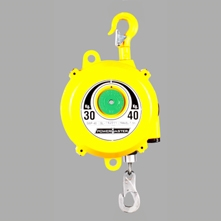
Industrial workplaces often require workers to handle tools repeatedly during production. Heavy tools can cause fatigue and make repetitive tasks difficult. A suitable balancing system helps workers position equipment with less effort while keeping tools accessible. An adjustable tool balancer is a practical solution for manufacturing units, assembly lines, welding stations, and industrial workshops.
These systems use spring tension to support suspended tools and reduce the effort required to handle them. They help maintain an organised workspace and allow workers to move tools more comfortably during daily operations.
How Does an Adjustable Tool Balancer Work?
An adjustable tool balancer is a tool support mechanism which has a wire rope and a spring that is inside the tool to hold a tool in the air. The tool is fastened to the rope and the balancer is positioned on top of the working area. The tool is held in place by spring tension which can be used to pull it down, position it and to guide it back to its starting position when the task has been completed. For appropriate models, the tension can be adjusted to be equal to the tool’s weight. Properly adjusted tools maintain balance while using. This is especially helpful when workers are doing the same task numerous times during a shift.
There are various load capacities and travel lengths of industrial spring balancers. The right selection of the model is determined by the weight of the tool, movement needed and working environment conditions. Safety features are also important. Model-dependent characteristics like enclosed bodies, safety lock pins, secondary support points and protected spring assemblies may help to minimize hazards in the workplace. This requires regular inspection and proper installation for reliable operation.
Key Benefits of Using a Spring Balancer for Tools
A spring balancer for tools offers several practical advantages in industrial settings.
- Less operator fatigue: operator does not have to carry the full weight of suspended tool during the job.
- Improved access to tools: Tools are suspended close to workstation, less frequent repetition of picking up and putting down.
- More efficient workspace organization: Overhead tool suspension keeps work surfaces clean.
- Controlled tool handling: A well adjusted system provides smooth handling of the tool during repetitive handling.
- Convenience of tool position: An easy tool position can help workers develop a consistent flow of work.
Spring balancers can be valuable in automotive production, assembly, welding stations and workshops where pneumatic or electric tools are used frequently.
How to Choose the Right Spring Balancer
The first step in selecting an appropriate spring balancer for tools is to determine the weight of the tool and all tools mounted on it. The model chosen shall be within the manufacturer’s load range. Then, take into account the distance the cable needs to move. The tool should have the ability to move to required working positions without over extending the wire rope. Other factors such as mounting space, operating frequency and working environment should also play a role in the selection.
Another major factor, maintenance. Check the wire rope, hooks, mounting points and spring mechanism per manufacturer’s instructions. Never use beyond capacity rating or bypass indications of wear. Safe performance over time is maintained by the proper adjustment of tension and regular servicing.
Conclusion
Tool balancer helps in enhanced ease of handling in the tool, better organisation and comfort of the operator. Choosing the right capacity, length and safety features is crucial for reliable operation.
Spring Balancers is a company that provides industrial spring balancers for different tool-handling applications. Test its capabilities with a variety of solutions for use at assembly lines, welding stations, manufacturing sites and workshops looking for efficient, dependable equipment support.